

Park · Los Angeles · ⭐ 9.5/10 · 2531 reviews · updated: 2026-08-04 16:03:22
Address: 100 N Toluca St, Los Angeles, CA 90026, United States
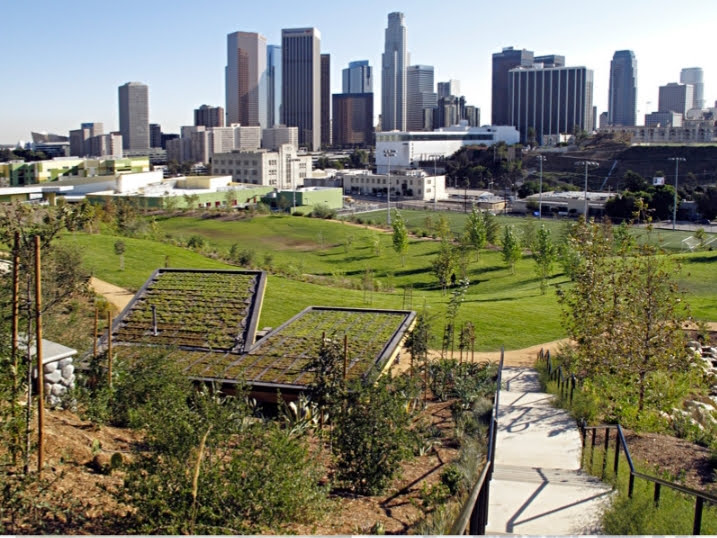
Vista Hermosa Natural Park — the first new park in downtown Los Angeles in a century
Ten and a half acres of oak savanna, running water and meadow grass on a hillside at the western gateway to downtown — and then, through a gap in the sycamores, the whole skyline laid out below you. The name means “beautiful view” in Spanish, and it is not marketing. What makes Vista Hermosa remarkable is not only the view but the ground it stands on: a turn-of-the-century oil field that sat capped, contaminated and unusable for decades before it was excavated, vented, replanted with native species and opened as a public park on July 19, 2008 — the first new park in downtown Los Angeles in more than a hundred years.
Highlights
- The skyline overlook — the high edge of the meadow, where the downtown towers stand clear above the grass; one of the most photographed vantage points in the city and the reason the park has its name.
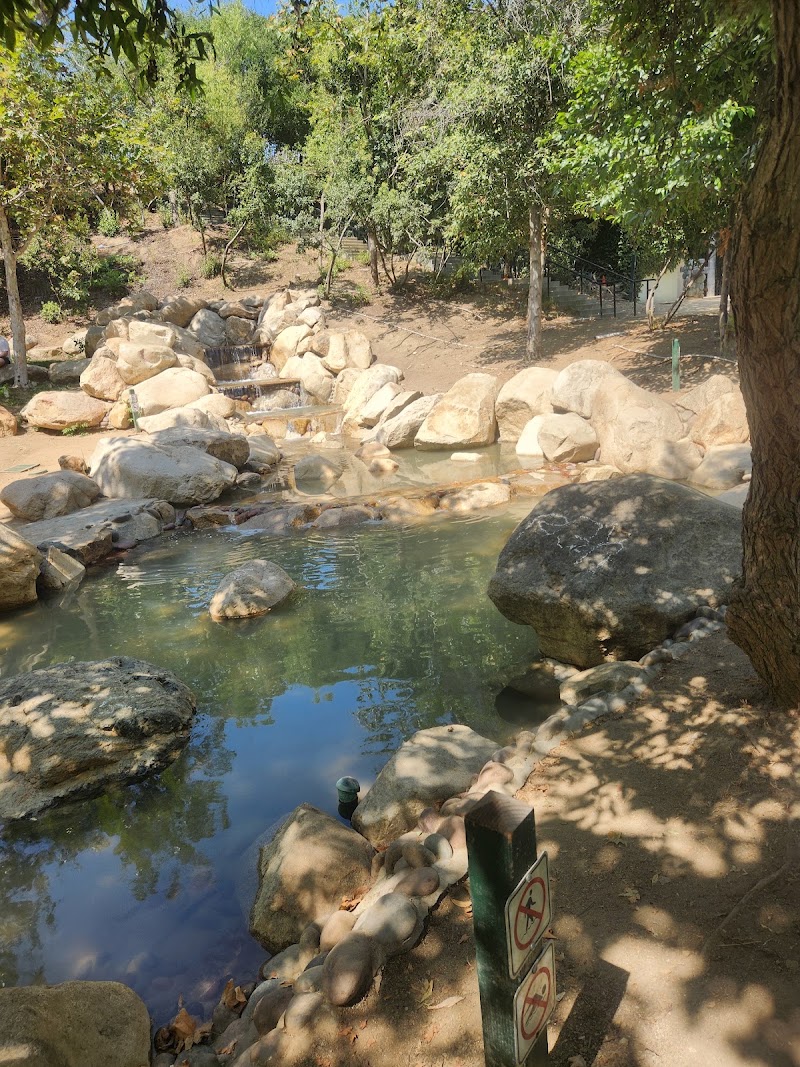
- The waterfall and stream — a cascading water feature at the head of a stream that runs down through the park, audible from most of the trail and a genuine rarity in central Los Angeles.
- The grotto amphitheater — an outdoor theater set into a rock grotto, shaded by native sycamores and framed by the falling water, built for nature and environmental education and used for public programs.
- The oak savanna — coast live oaks spaced across open grass in the pattern of a real California savanna, with California sycamore, Fremont cottonwood, willow and ash along the watercourses.
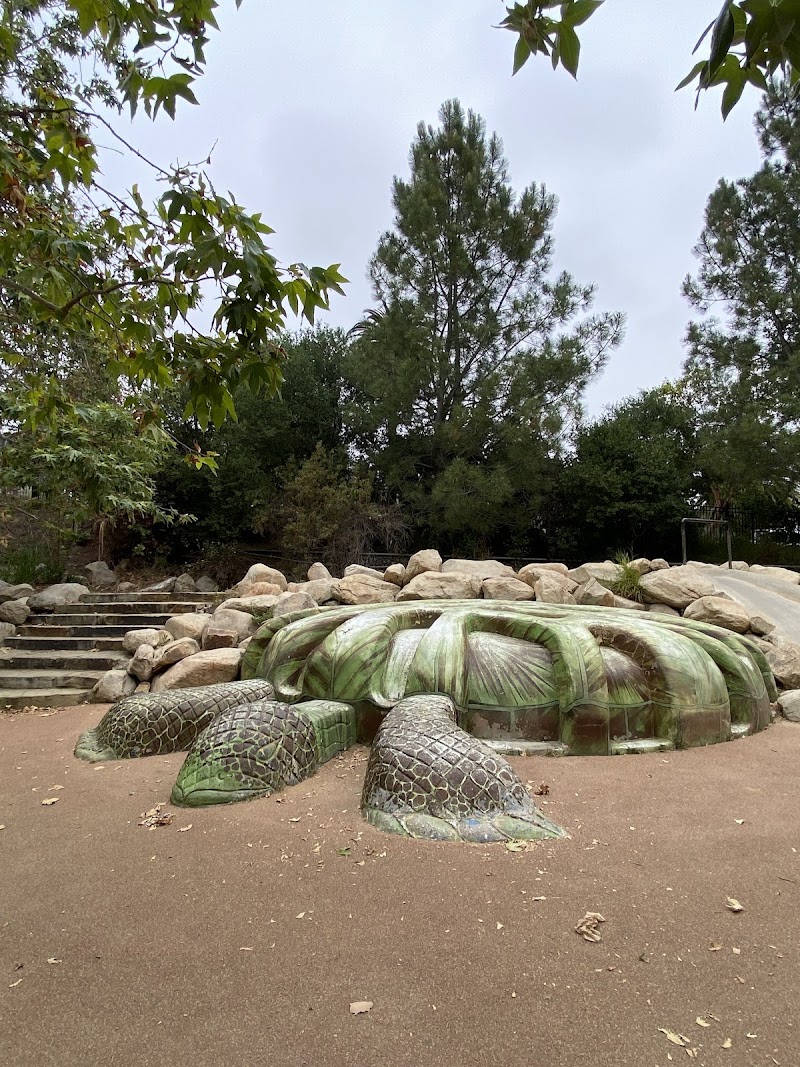
- The nature-themed children’s adventure area — a playground built from boulders, logs and landform rather than molded plastic, sitting in the middle of the planting.
- The full-size soccer field — a FIFA-regulation field shared between the adjacent Edward R. Roybal Learning Center and the city’s recreation department, tucked below the natural areas so the two uses do not collide.
What you’ll find
The park is small enough to see in an hour and layered enough that it does not feel small. A trail of just under half a mile winds through it with what the designers called choreographed views — the skyline is hidden, then revealed, then hidden again.
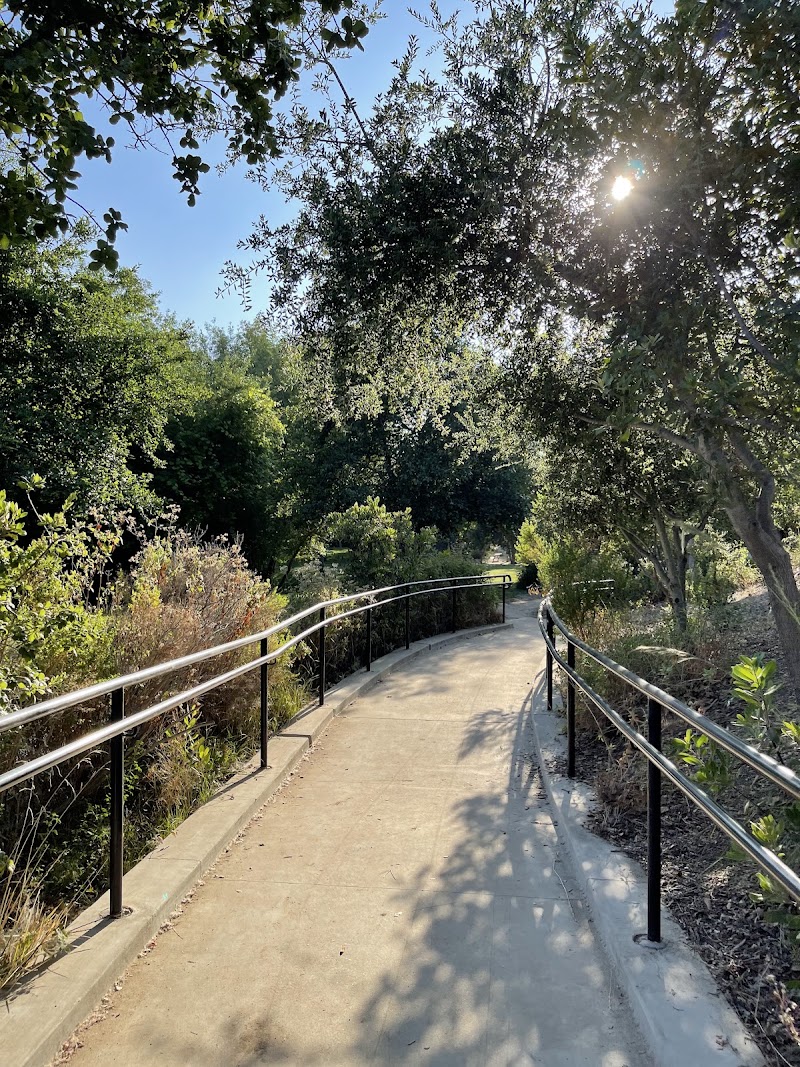
- A 0.4-mile walking trail with real gradient, climbing from the lower fields to the overlook.
- Chaparral and coastal sage scrub planting: California sagebrush, white and black sage, laurel sumac, toyon, manzanita and deer grass.
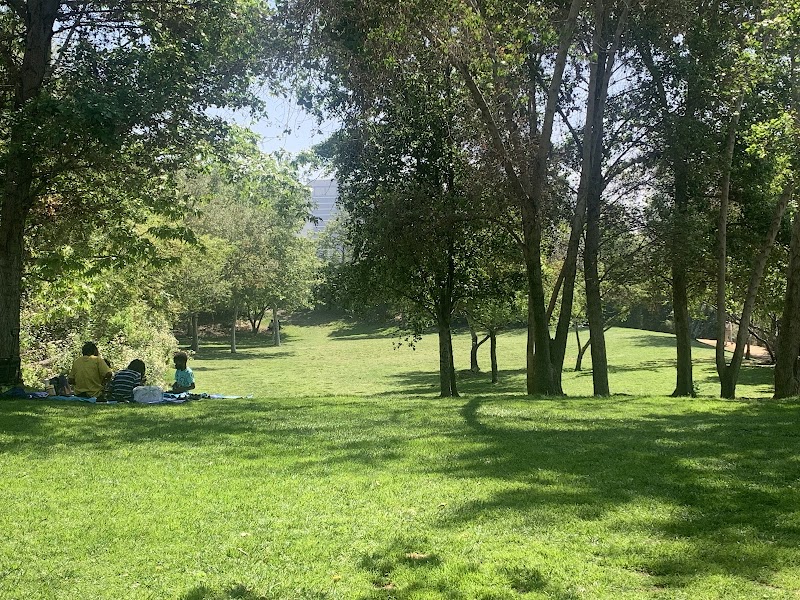
- Meadows and picnic grounds with tables under the trees, and lawn open enough to spread a blanket.
- Bilingual interpretive signage on the watershed, the native plants and stormwater.
- Restrooms, drinking fountains and benches through the park, with a small free parking lot.
- MRCA rangers and a year-round program of school and youth environmental education.
Things to do — and who it’s for
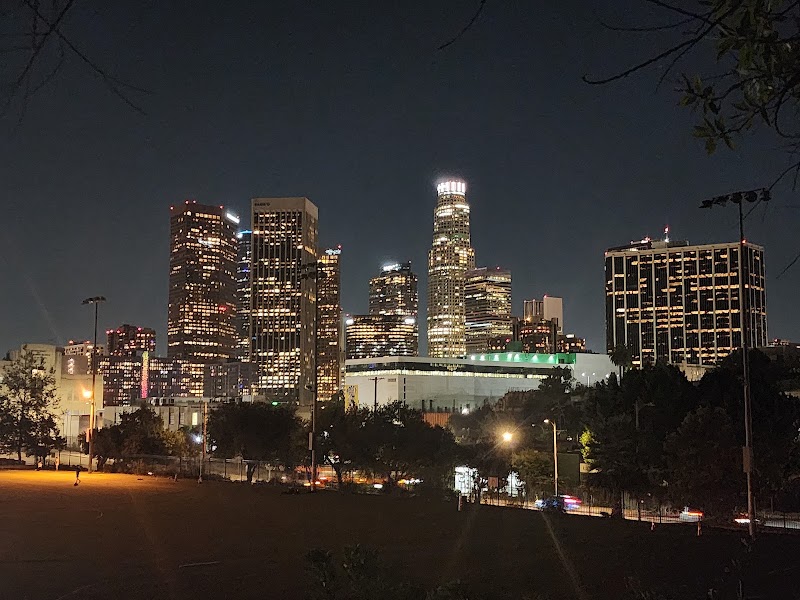
- Photographers — the overlook gives an unusually high, unobstructed line on the towers, and it is at its best in the last hour of daylight and just after dark.
- Families with young children — the nature playground, the stream and the short loop make this one of the gentlest introductions to hiking a small child can have.
- Downtown workers — a genuinely quiet lunch hour within reach of the office towers, on grass, with running water in earshot.
- Native plant enthusiasts — the sage scrub and savanna palette is planted as habitat, not decoration, and is labeled well enough to learn from.
- Picnickers — shaded tables and open meadow, with no concessions on site, so bring what you intend to eat.
- School and community groups — the grotto amphitheater and the watershed signage were designed for exactly this, and rangers run programs through the year.
Getting there & practical
The park sits on the ridge between Echo Park and the downtown core, at what the city calls the western gateway to downtown — high enough above the Civic Center that the towers read as a wall of glass rather than a distant horizon. There is no rail station at the gate: the closest are the Metro B and D Line stations serving MacArthur Park and the Civic Center, each roughly a mile away on foot, and several bus routes stop much closer. A small free parking lot sits at the entrance, and beneath it a 20,000-gallon cistern collects stormwater and recirculates it for irrigation. Entry to the park is free and there are no ticketed areas. Hours run from dawn to dusk, and the gates close at sunset — this is not an after-dark park. Dogs are welcome on a leash. Allow forty-five minutes to walk the loop and sit at the overlook, an hour and a half with a picnic.
When to visit
Spring is the strongest season: the meadow is green, the sages and monkeyflower are in flower, the stream runs full after winter rain, and the temperature suits a hillside walk. Summer is hot and the grass browns off in the Californian way, but the oaks and sycamores hold real shade and the stream still runs, so early mornings and the hours after five are entirely comfortable. Autumn brings the year’s clearest air and its warmest evenings — the best window for the skyline overlook, when the towers catch low light and then switch their own lights on. Winter is the surprise: after a storm the hills green up within days, the water features run hard, and the San Gabriel Mountains appear behind downtown in a way you will not see in August.
Good to know
The hillside was part of the Los Angeles oil district worked at the turn of the twentieth century, and it was never properly capped. When the Los Angeles Unified School District began building the Belmont Learning Complex here, construction was halted in 1999 after methane and hydrogen sulfide were found in dangerous concentrations below the surface; two years later the site was also shown to sit on an earthquake fault. The suspension was not lifted until 2003. The school eventually opened on September 3, 2008 as the Edward R. Roybal Learning Center, twenty years after the project began.
The park was negotiated out of that same remediation. Contaminated topsoil was excavated and replaced, a ventilation system was installed to control the movement of gases, and the Santa Monica Mountains Conservancy and the Mountains Recreation and Conservation Authority — working in partnership with the school district and the City of Los Angeles — built a natural park on top. It opened on July 19, 2008 at a cost of about fifteen million dollars, and MRCA has run it since, with rangers on site and environmental education programs for local schools. In 2023 the American Society of Landscape Architects recognized the project, singling out what it delivered for a dense working-class district that had almost no park land at all. That is the point of Vista Hermosa: not a beauty spot that happened to be available, but a piece of poisoned ground deliberately turned into the nearest thing downtown has to wild California.
Visitor tips
- Time the overlook for the last hour of daylight — the towers pick up warm light, then their own, and the walk down is short.
- The loop is short but the slope is real; wear something with grip if you are coming straight from the office.
- There is no kiosk or café inside, so bring water and food, and use the shaded tables rather than the open meadow in summer.
Questions & answers
Is entry free? Yes, entirely — the park, the trail, the playground and the parking are all free, and there is nothing ticketed inside.
What are the hours? Dawn to dusk, with the gates closing around sunset. Plan the overlook for the end of the day rather than after dark.
Is it really built on an old oil field? Yes. The site was an oil field worked around 1900 and was never capped properly. Contaminated soil was removed and replaced and a gas ventilation system installed before the park was built on top.
Is it suitable for small children? Very. The nature-themed adventure area, the stream and the short trail are pitched at young children, and the paths are manageable, though the park is on a slope.
How good is the downtown view? It is the reason the park exists and the reason it is named “beautiful view” — an elevated, unobstructed line on the skyline from a grass meadow, which is close to unique this near the core.
How long should I plan? Forty-five minutes for the loop and a sit at the overlook; an hour and a half if you picnic or bring children to the playground.
Photos
Show 1 more photos
Visitor reviews
Reviews last updated: 2026-08-04 16:03:22
Data is refreshed monthly. Sources: los-angeles.name and editorial picks based on reviews.
Vista Hermosa Natural Park is a true hidden gem of the city. Although parking can be a bit tricky, everything else about the park makes up for it. The park is stunningly beautiful and impeccably clean, offering plenty of…
So, this park… I came across it by accident. About a year ago I was having a rough day… just driving aimlessly, and I decided to turn onto this road and pulled into the parking lot at Vista Hermosa National Park. And…
Vista Hermosa Park is a large 10.5-acre park in downtown Los Angeles. It has decent parking, incredible green space, a playground for kids and a soccer field on a fully grassy area with incredibly rare downtown views.…
Secret LA gem! Gorgeous, clean park with a fantastic view of DTLA! Wheelchair accessible! Dog paradise! Soccer field! Free parking!
You get it all here! The lot is small and parking is difficult to get. The park is nice…
At first glance it seemed like an unremarkable park in Los Angeles, but it stirred up childhood memories for me and my three siblings. It was our first stop today (Monday, May 18, 2015), with a small waterfall called the…