

Park · Los Angeles · ⭐ 9.7/10 · 5672 reviews · updated: 2026-08-04 16:03:19
Address: 2000 N Fuller Ave, Los Angeles, CA 90046, United States
Runyon Canyon Park — 160 acres of Hollywood hillside where the whole city comes to climb
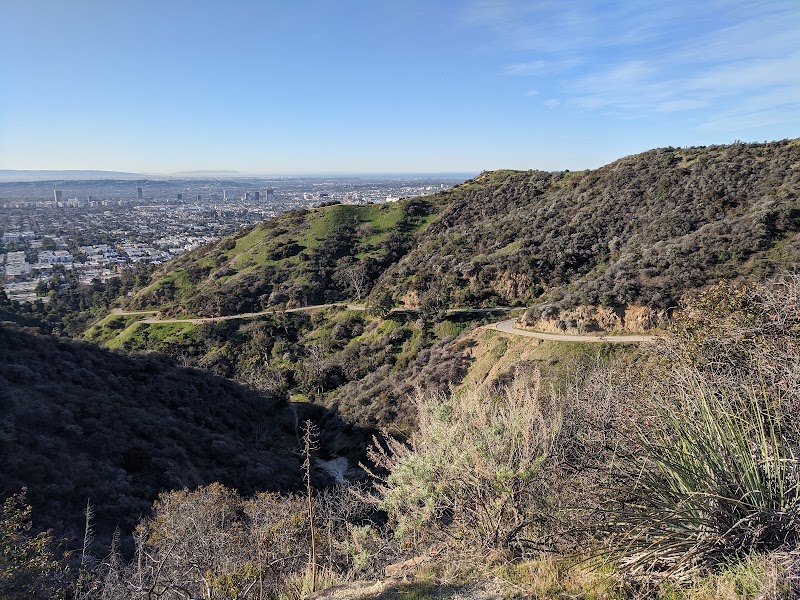
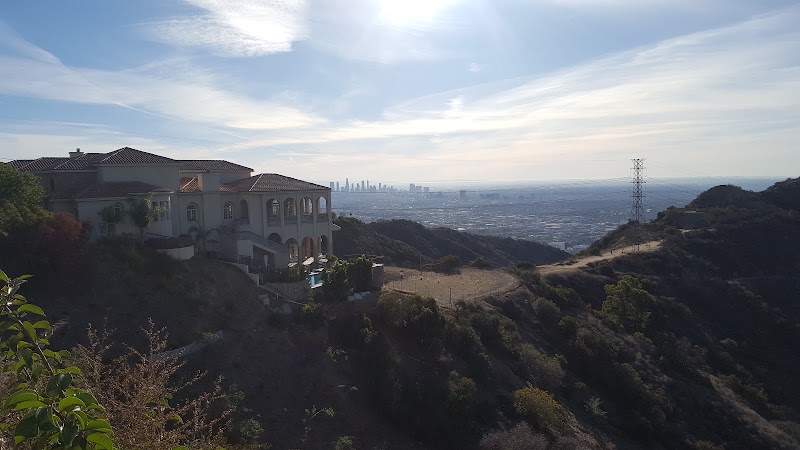
Ten minutes above the boulevards, the chaparral takes over. Runyon Canyon is 160 acres of steep, sun-bleached hillside at the eastern end of the Santa Monica Mountains, and it functions as Los Angeles’s outdoor gym, dog park, photo studio and social club at once. Trails climb from a shaded lower lawn to open ridges where the Hollywood Sign sits to the east, the towers of downtown float in the haze and, on a scoured winter morning, the ocean and Catalina appear behind Century City. Under the dust lie the foundations of one of Hollywood’s great lost estates, and the truth about the park’s biggest asset — the view — is that it comes with almost no shade.
Highlights
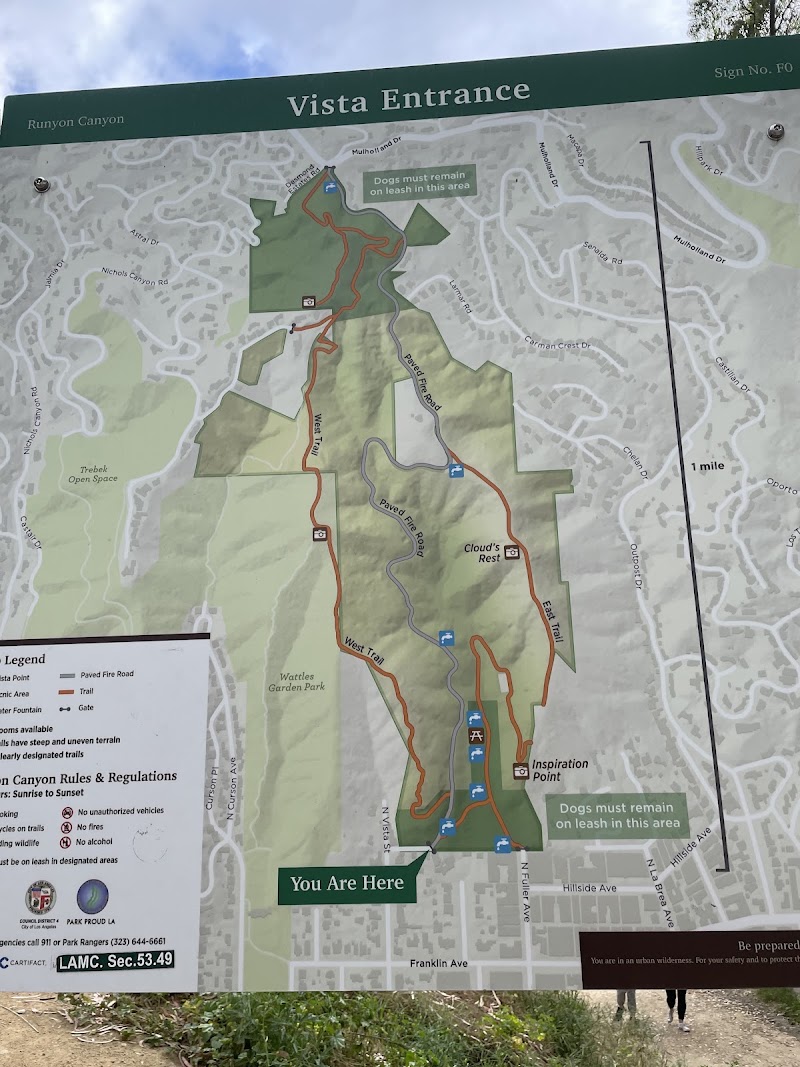
- Inspiration Point — the mid-mountain bluff with benches that is the park’s default turnaround, taking in the basin from downtown across to the coastal plain.
- Cloud’s Rest — the upper viewpoint named for a guest cottage Frank Lloyd Wright designed here for George Handley, a friend of the estate’s owner; the loop linking it to Inspiration Point runs about 1.9 miles with roughly 515 feet of climb.
- The estate ruins — stone foundations, a derelict tennis court and a fireplace left from the mansion and pool house of an estate that housed the Irish tenor John McCormack and, in the late 1950s, Errol Flynn.
- Indian Rock — the park’s high point at 1,320 feet, the payoff for the ridge climbs and the widest panorama on the property.
- The off-leash acreage — dogs may run free across roughly 90 of the park’s 160 acres, one of the largest off-leash areas in the city, with leash zones near the north and south entrances.
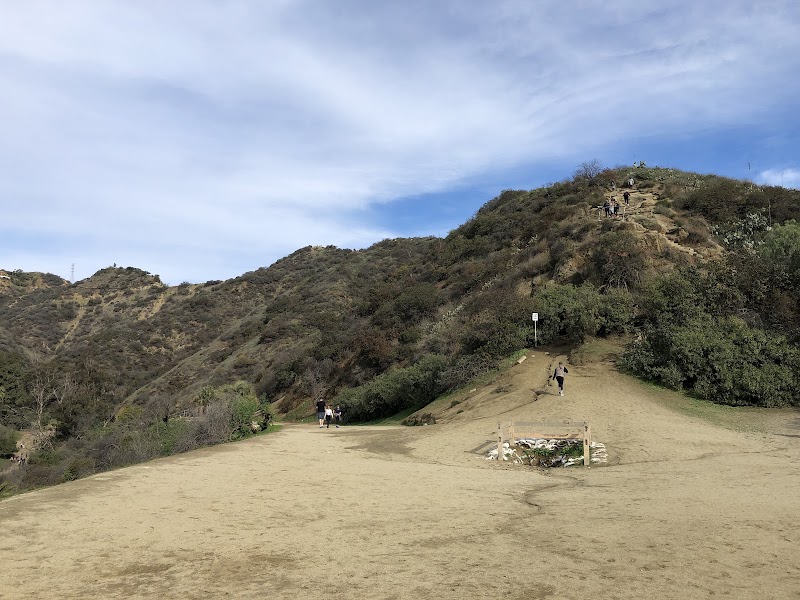
- Three graded routes from the southern gate — the paved fire road for a gradual climb, the Star Trail with its railroad-tie steps for a 30-to-45-minute loop, and the ridge-spine Hero Trail, an 18-degree grind that takes 45 to 60 minutes.
What you’ll find
Runyon is deliberately unimproved: no parking lot, no café, no lighting, no ranger station. What it has is trail, view and wildness kept a few minutes from the city grid.
- Drinking fountains near the southern gate built at four heights — adults, children, dogs and a bottle filler — the last reliable water before the ridge.
- A flat lawn just inside the southern gate where donation-based morning yoga has gathered for years, and where dogs meet before the climb.
- Chaparral flora that flowers through spring: black sage, California sagebrush, laurel sumac, wild buckwheat, golden yarrow, toyon, sugar bush, scrub oak and elderberry.
- Real wildlife — red-tailed hawks and owls overhead, coyotes on the ridgelines at dawn, lizards everywhere and rattlesnakes in the warm months.
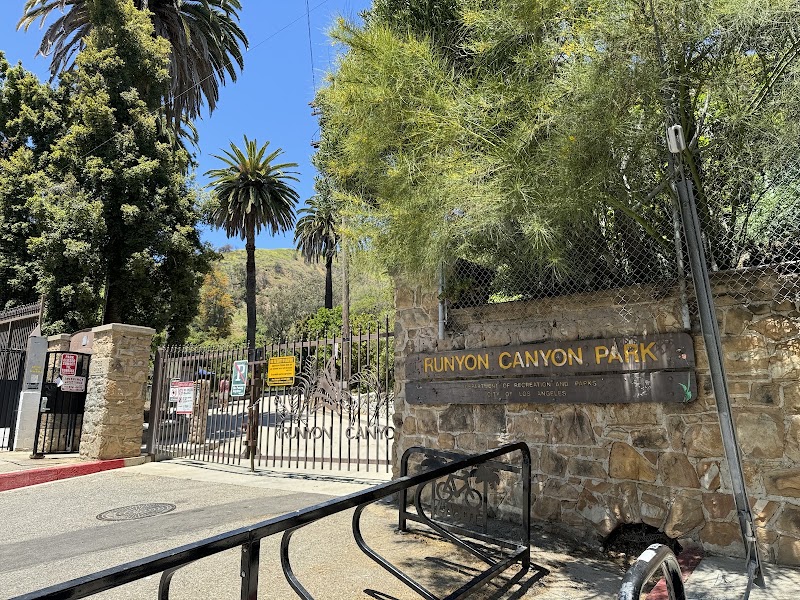
- Five gates spread around the canyon, including the busy southern and western entrances in the residential hills and the northern one high on the ridge, plus a connection toward Wattles Garden.
- Restrooms have historically been absent from the park; a facility at the southern entrance was being added as trails reopened in 2026, so plan on going before you arrive.
Things to do — and who it’s for
- Dog owners — about 90 acres where a dog with reliable recall can run off leash on real terrain rather than a fenced pen.
- Trail runners and the workout crowd — the Hero Trail’s ridge grind and the tie-step staircases are a hill session that needs no gym.
- First-time hikers and visitors on foot — the paved fire road climbs steadily and can be turned back at any point.
- Photographers — the Hollywood Sign to the east, the skyline south-east and city lights after sunset, all from open ridge with nothing in the way.
- People-watchers — the canyon has been Hollywood’s open-air social circuit for decades, and the celebrity-spotting reputation is earned.
- History-minded walkers — the ruins, terraces and stray steps scattered across the lower canyon are the remains of a century of failed grand plans.
Getting there & practical
The park occupies the Hollywood Hills directly above Hollywood, wedged between residential ridges and the Santa Monica Mountains, of which it forms a part of the wider national recreation area. Public transit is genuinely the best option: take Metro’s B Line to Hollywood/Highland station and walk about a mile uphill, roughly twenty to thirty minutes, to the southern gate. There is no parking lot anywhere in the park, and curbside parking in the surrounding residential blocks is permit-restricted and actively enforced, so drivers routinely circle for a long time; a rideshare drop-off is faster and cheaper in every sense. Entry is free and unticketed. The park is open sunrise to sunset with no lighting, so plan to be off the ridge before dark. Dogs run off leash in the designated areas covering about 90 acres and must be leashed near the north and south entrances, with owners cleaning up after them. Carry water — there is none above the entrance fountains — and check the city’s current notices, because sections of the park have closed for fire damage and rehabilitation.
When to visit
Winter and early spring are the canyon at its best: after rain the hillsides green over, the wildflowers follow, the air clears and the view stretches to the water, with February through April the sweet spot. Late spring keeps the flowers and adds warmth, and mornings stay pleasant into June. Summer needs honesty — this is chaparral, so above the lower lawn there is essentially no shade at all, and the exposed ridges can climb past the mid-nineties Fahrenheit in the afternoon while the decomposed granite radiates heat that burns dog paws. In July and August, hike before nine in the morning or after five in the afternoon, carry more water than feels necessary, and test the ground with your hand before bringing a dog up. Fall brings the sharpest views of the year on Santa Ana wind days, but those same conditions mean extreme fire danger, and the park can close outright at short notice. Whatever the season, early morning is quietest; weekend midday is the busiest the trails ever get.
Good to know
The canyon has changed hands more dramatically than almost any park in the city. The Gabrielino/Tongva used these hills seasonally. In 1867, a 160-acre parcel here was patented to Georgios Caralambo — “Greek George” — in recognition of his service with the U.S. Army Camel Corps. In 1919 Carman Runyon, newly retired from an eastern coal business, bought the canyon as a hunting and riding retreat and left it his name. In the 1930s the Irish tenor John McCormack built a mansion he called San Patrizio, with tennis courts, a pool and guest quarters, renting it to Hollywood figures while he toured Europe. In 1942 the A&P heir George Huntington Hartford II bought the property, renamed it “The Pines” and commissioned Frank Lloyd Wright and Lloyd Wright to design an ambitious country club, including a pool pavilion at Inspiration Point; neighbors defeated the scheme, though Wright’s cottage for George Handley gave Cloud’s Rest its name, and Errol Flynn, having lost his own house in an alimony settlement, moved into the estate’s pool house in the late 1950s. The coffee-liqueur entrepreneur Jules Berman razed the buildings in the 1960s and 1970s, and his proposed luxury subdivision was blocked in 1978. In 1984 the City of Los Angeles and the Santa Monica Mountains Conservancy bought the land outright, and the canyon became public. The generous dog policy grew from an experimental small off-leash area in the 1994 master plan into today’s roughly 90 acres. Metro’s subway tunnels, bored between 1994 and 1999, run deep beneath the canyon. Most recently, the Sunset Fire of January 2025 scorched about 60 acres here and closed the park; the West Ridge Trail then stayed shut for more than a year while the habitat recovered and reopened in February 2026 to immediately packed crowds.
Visitor tips
- Go at sunrise. You get cool air, parking-free access on foot, the clearest light of the day and the canyon’s regulars rather than its crowds.
- Take twice the water you think you need and a hat; between the lower lawn and the summit there is no shade, no shop and no fountain.
- Test the ground with the back of your hand before taking a dog up on a hot day — the granite surface can burn paws long after the air has cooled.
Questions & answers
Can dogs really be off leash? Yes, in the designated off-leash areas, which cover roughly 90 of the park’s 160 acres. Leashes are required near the north and south entrances, owners must clean up, and because this is urban wilderness with coyotes and rattlesnakes, only let a dog loose if its recall is solid.
How hard is the hike? There are three grades from the southern gate: an easy paved fire road, the medium Star Trail with railroad-tie steps and 30-to-45-minute loops, and the difficult Hero Trail up the ridge spine at about an 18-degree slope, taking 45 to 60 minutes.
Are there restrooms and water? Fountains at the southern gate serve adults, children and dogs and can fill bottles, but there is nothing above them. The park long had no restrooms at all, with a facility at the southern entrance added around the 2026 trail reopening.
Where do you park? Nowhere, officially — the park has no lot, and the residential blocks around the gates are permit-restricted and enforced. The B Line to Hollywood/Highland station plus a mile of uphill walking, or a rideshare drop-off, saves a great deal of frustration.
Can you see the Hollywood Sign? Yes. From the ridge and from Inspiration Point the sign stands clear to the east, along with the downtown skyline; this is a wide-angle view of the sign rather than a close-up.
Is any part of the park still closed? The West Ridge Trail, shut after the January 2025 Sunset Fire burned about 60 acres, reopened in February 2026 following habitat rehabilitation. Closures can return on red-flag fire days, so check the city’s notices before setting out.
When is the best time of day? Early morning, year-round. There is no shade on the upper trails, afternoon ridge temperatures can be punishing in summer, and the park closes at sunset with no lighting on the paths.
Photos
Show 1 more photos
Visitor reviews
Reviews last updated: 2026-08-04 16:03:19
Data is refreshed monthly. Sources: los-angeles.name and editorial picks based on reviews.
Spent the day in Runyon Canyon, and I completely understand why it's one of Los Angeles' most famous hiking trails. The views are stunning, the energy is unbeatable, and every turn opens up another perfect view of the ci…
During a solo trip based in West Hollywood, Louisiana, I wanted to do a sunrise hike , and I'm very glad I read the reviews of Runyon Canyon — it did not disappoint!! Scenic views, clean, paved trails and friendly fell…
Visited with family on January 4, 2026.
Runyon Canyon Park is one of the best hiking spots in Los Angeles. The trail offers wonderful views of the city, and from certain points you can see downtown Los Angeles, the Grif…
Runyon Canyon Park is one of Los Angeles' most famous urban parks, perfect for a walk or an easy hike with breathtaking views of the city. The trails are well marked and of varying difficulty: in a short time you'll reac…
Incredible views, and even better — the hike. There are two routes you can take, both very scenic and with incredible views you won't see anywhere else. There are steep climbs and also easy descents. You can choose which…