

Modern ecology increasingly relies on mathematical modeling and interdisciplinary approaches to demystify the complex processes within natural systems. A leading voice in this field is Priyanga Amarasekare, an American ecologist renowned for her work in theoretical and mathematical ecology. Her research has significantly advanced our understanding of biodiversity, interspecific interactions, and the impact of climate change on ecosystems. With a career spanning decades of research and teaching at top-tier U.S. universities, she is best known for her mechanistic approach to ecology—a method that seamlessly bridges mathematical modeling with rigorous empirical data. More on los-angeles.name.
Biography
Priyanga Amarasekare earned her Master’s degree in Zoology from the University of Hawaiʻi at Mānoa in 1991. Even then, her research—focused on the impact of predators on Hawaiian forest bird populations—hinted at her burgeoning interest in ecological interactions and population dynamics.
After completing her graduate studies, she joined the University of Chicago, where she honed her focus on ecological theory and mathematical modeling. It was during this period that she developed her deep-seated interest in spatial ecology and metapopulation systems.

Academic Career at UCLA
She later became a professor of Ecology and Evolutionary Biology at the University of California, Los Angeles (UCLA). Her research centers on:
- Mechanisms that maintain biodiversity in changing environments;
- Spatial and temporal population dynamics;
- Species interactions within complex, multi-level ecosystems;
- The impact of climate change on ecological systems.
A hallmark of her work is the fusion of theoretical models with real-world field data, allowing for more precise and verifiable scientific conclusions.
Her work has provided crucial insights into how climate change alters species interactions and ecosystem structures. This approach is often compared to that of Robert MacArthur, one of the most influential ecologists of the 20th century. Like MacArthur, Amarasekare strives to create elegant yet profound models that capture fundamental ecological processes without sacrificing scientific rigor. She places particular emphasis on environmental spatial heterogeneity and how it shapes species interactions. While her early research focused on interspecific competition across different ecological niches, she has since expanded these models to incorporate multi-level trophic systems.
Priyanga Amarasekare remains a pivotal figure in mathematical biology. Her research explores non-linear processes in nature, where even minor environmental shifts can lead to significant ecological consequences. She has made substantial contributions to key areas, including:
- Population regulation;
- Interspecific competition;
- The evolution of dispersal mechanisms;
- The stability of multi-trophic ecosystems.
In recent years, her work has focused on how global warming affects ecosystems. Amarasekare investigates how different biological traits of species respond to temperature fluctuations, grounding her approach in the biochemical processes that dictate organismal viability. She demonstrates that various functions—such as growth, reproduction, and foraging—respond differently to rising temperatures. This allows for the creation of accurate models that forecast species behavior under diverse climate scenarios. These studies also have vital applied implications, particularly for predicting the spread of vector-borne diseases and optimizing conservation planning.

The Uniqueness of Her Research
A vital aspect of Amarasekare’s work is her ability to marry fundamental theory with experimental validation. Few ecologists can balance the development of complex conceptual models with the design of empirical studies meant to test their predictions. It is this integration that gives her work both theoretical significance and practical utility in addressing real-world ecological challenges.
A distinct branch of her research is dedicated to multi-species interactions in complex spatial environments. By progressively increasing the complexity of her models, adding layers of trophic connections, and accounting for various dispersal strategies, she has deepened our understanding of how organisms coexist and how ecological communities form across diverse landscapes.
Her empirical research has included experiments with parasitoids seeking hosts in complex environments. These studies have not only bolstered her theoretical models but have also provided practical recommendations for natural resource management, such as the design of marine protected areas facing anthropogenic pressure.
Scientific Recognition
Amarasekare’s influence is reflected in her impressive citation count—over 12,000 since she earned her doctorate. Her research has secured substantial funding, including over $1.7 million in grants from the National Science Foundation and the James S. McDonnell Foundation. She is a frequent invited speaker at international scientific conferences and previously served as an editor for a thematic section of the journal Frontiers in Ecology and Evolution.

Throughout her career, she has received numerous prestigious awards confirming her impact on modern ecological science. Notable honors include a 2021 Guggenheim Fellowship, the 2022 Robert H. MacArthur Award from the Ecological Society of America (ESA), and status as an ESA Fellow. She has been widely recognized for her contributions to theoretical ecology, particularly regarding spatial and temporal population dynamics.
Amarasekare is also active within the American Society of Naturalists, serving as Vice President since 2022. In this capacity, she organizes scientific events and supports the development of early-career researchers. Notably, she spearheaded a symposium on the mechanistic understanding of ecological processes, which brought together young scientists from various disciplines.
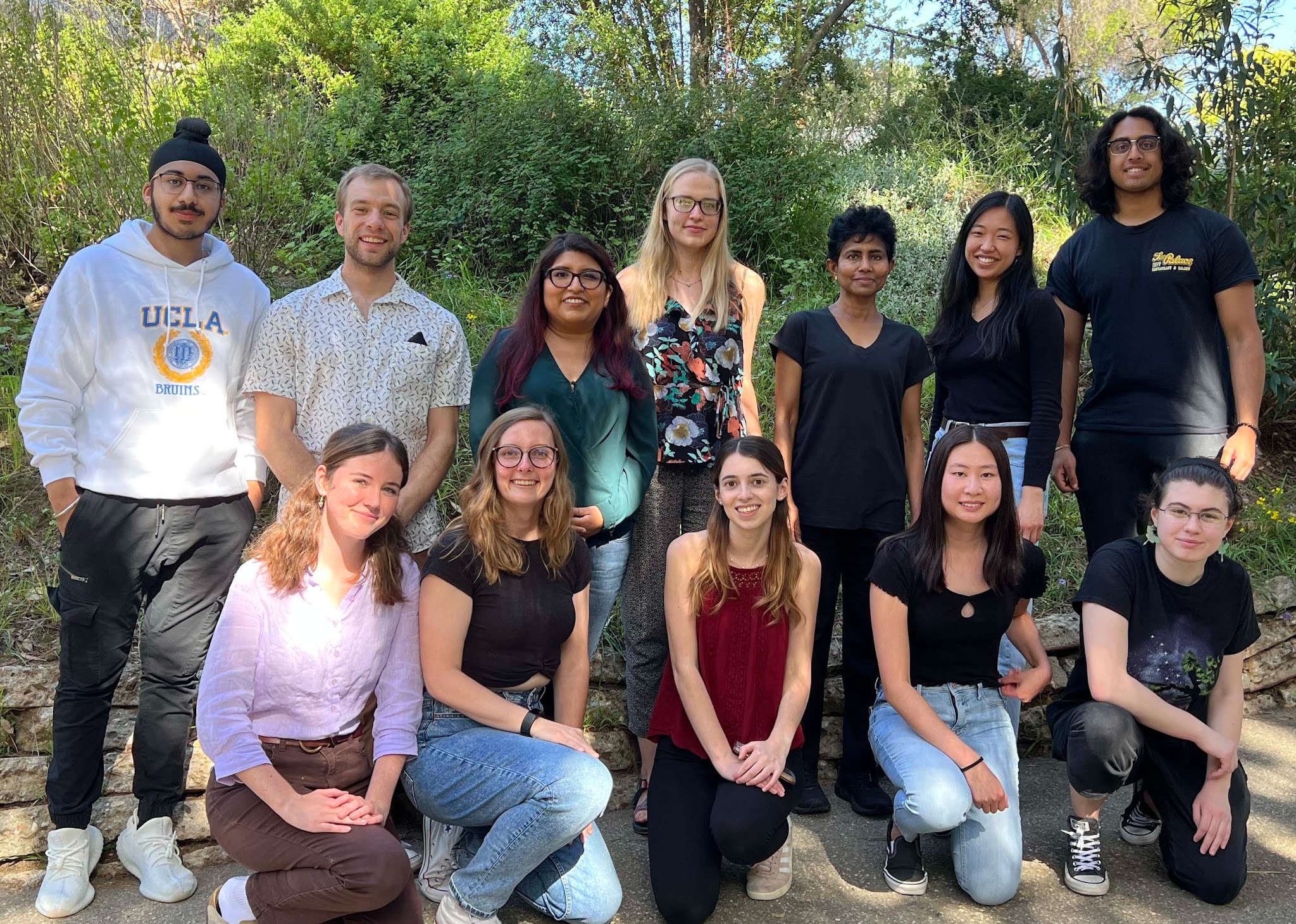
Mentorship is another cornerstore of her career. Since 2007, she has worked with over 30 undergraduates, helping them realize their own research projects. Many of her mentees have completed significant undergraduate theses, and several have gone on to receive prestigious scientific fellowships. Her approach to mentorship combines academic rigor with the encouragement of creative thinking, helping to shape the next generation of ecologists.
Public and Academic Resonance
In 2021, Amarasekare became the subject of a significant academic discussion regarding administrative decisions at UCLA. Following internal hearings, she was placed on leave and denied access to university resources. This situation sparked widespread debate within the scientific community, with over 500 scientists globally signing a petition calling for a review of the decision and her reinstatement.
Priyanga Amarasekare’s career demonstrates how the intersection of mathematics, biology, and ecology can forge new pathways in our understanding of natural systems. Her work has not only expanded the theoretical boundaries of the field but has also provided essential tools for analyzing global environmental challenges. Her contributions remain vital to the future of ecological research, particularly in the face of ongoing climate change and the urgent need for biodiversity preservation.