

It’s the story of how an idea can turn itself into some sort of obsession. Los Angeles Name will tell you more about the marine biologist at California State University Long Beach.
Watts Towers
Bruno Pernet discovered 34 species of shells in the structure after analyzing about 10,000. The man saw different species. The exceptional thing is that none of the specimens found have seen the ocean in decades. City dwellers and visitors to Los Angeles can see the colorful shells at Watts Towers, a folk art monument. It towers over a modest neighborhood of one-story houses in South Los Angeles.
As a reminder, Simon Rodia spent 33 years, from 1921 to 1954, building a collection of 17 interlocking sculptural towers. What is interesting is the value of structures for Bruno Pernet, considering that they tell the story of past ecosystems. In an interview, the biologist said, “If this were a museum collection, all the shells would have labels. Here, the labels were missing.”
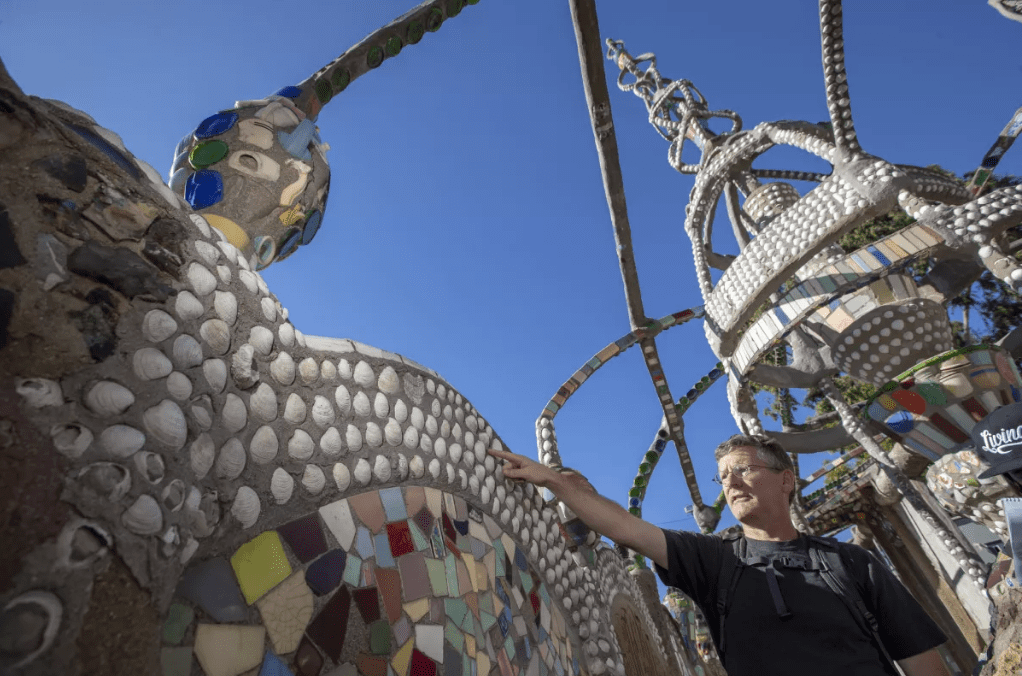
Bruno Pernet
It’s also worth telling more about Bruno Pernet himself. He is known to have spent much of his professional time studying the larval stages of worms and snails of the Southern California coast. At the same time, for over ten years, he has directed his scientific knowledge toward studying a national historic landmark. It became a sort of obsession for the professor of marine biology.
In his work, Bruno Pernet wanted to determine the species as well as the origin of all the shells on all 17 structures. The man referred to the study as Watts Towers Bivalve Inventory Project.
This idea can be described as bold and time-consuming, but Bruno Pernet characterized it as a substantial scientific study.
According to the biologist’s colleagues, this idea is not as unrealistic as it may seem at first glance. After all, creativity and science are always opposed. Bruno Pernet saw more, given his experience.
Amazing tours
It’s no wonder that Watts Towers has become an obsession for a professor of marine biology at CSU Long Beach. For example, the executive director of the Watts Towers Arts Center Campus shared that she still feels a sense of spirituality and peacefulness during tours of this place. Rosie Lee Hooks, the director of the campus, still wonders how one person could do something like this on their own. Simon Rodia’s creativity astonishes present-day city dwellers. The man once said that he wished he could do something big, so he has indeed succeeded.
Bruno Pernet first came to Watts Towers in 2009. He didn’t have that much of an introduction to Los Angeles yet, so one of his colleague biologists took him to the famous structure. He was captivated by the shells from the minute he stepped inside the wavy walls of the artwork. He had just finished a clam survey in Alamitos Bay, so he was ready to note that the shells were commonly grouped by size but not always by species. Three years have passed since he first began his study. In 2012, he took a leave of absence from his work at the University of Hawaii Marine Laboratory in Honolulu. It was after his return that he got time for his own project.
Interestingly, the professor has even gotten permission from Watts Towers security to stay on the grounds freely on weekdays between 9:00 am and 5:00 pm. Next, Bruno Pernet contacted a clam expert for professional identification.
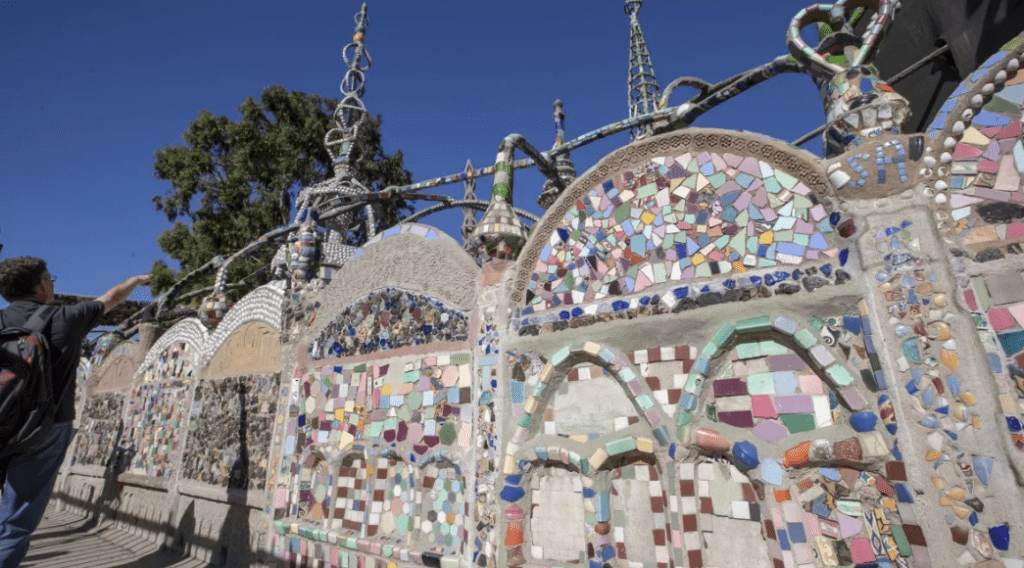
Division into sections
Using a schematic map, the biologist divided the tower structures into nearly 100 sections. The next step was to study several sections per day and document all the marine species they contained. His detailed notes and daily routines resembled traditional fieldwork more than anything else.
Pernet’s work will help in the future when replacing certain parts at the highest points. The results of the biologist’s project were featured in the Journal of Conservation and Museum Studies. The professor himself has repeatedly noted that the real pleasure was the interest and passion for the work, which has become almost obsession-like over the years.
Bruno Pernet’s meticulous work has enabled everyone to learn his research paper as well as the guidebook, which is available for free download.