

Howard Cary was the first president of the Optical Society of Southern California when it was founded in 1951. He also co-founded and served as chairman of Cary Instruments. He received the David Richardson Medal from the Optical Society of America in recognition of his outstanding achievements in Applied Optics. Cary was honored for his “painstakingly careful and very valuable contributions to the design and production of highly precise instrumentation in areas which range from spectroscopy to chemical, medical and nuclear research.” You can also learn about the first female doctor in Los Angeles, Elizabeth Follansbee. Find out more at los-angeles.name.
Biography
Howard Cary was born in Los Angeles. After graduating from Los Angeles High School in 1925, Cary enrolled at the California Institute of Technology. He missed one year of school owing to illness and graduated from the university in 1930 with a bachelor’s degree in civil engineering. He also served as the captain of the university’s tennis team. During his first year, he won the junior travel prize. After finishing his studies, Cary began working in his father’s plumbing and construction business. There, in the early years of the Great Depression, he worked in various engineering and accounting positions.
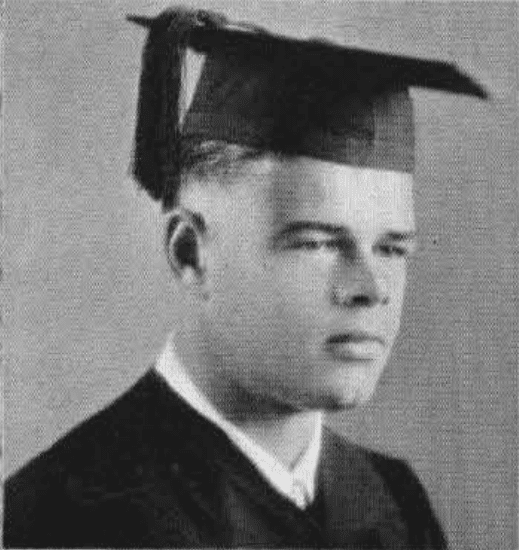
In 1935, Cary was hired by Arnold Beckman of National Technical Laboratories. In 1937, Cary became the chief design engineer in Beckman’s research group. Cary excelled at his work with pH meters and glass electrodes, eventually becoming the company’s vice president of development.
First developments
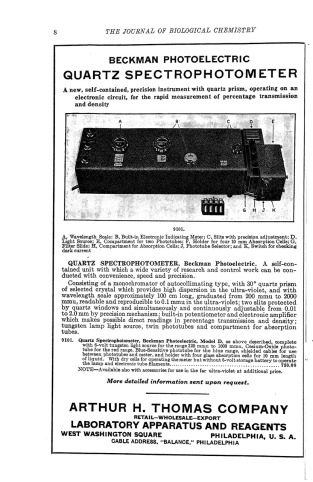
By 1940, Cary and Beckman were working on a quartz spectrophotometer. In July 1941, they presented a paper on this work at the Summer Conference on Spectroscopy at the Massachusetts Institute of Technology. Cary contributed significantly to the development, including the creation of a reliable UV phototube for the instrument. The DU spectrophotometer was the first simple-to-use device that included both the optical and electronic components required for ultraviolet absorption spectrophotometry.
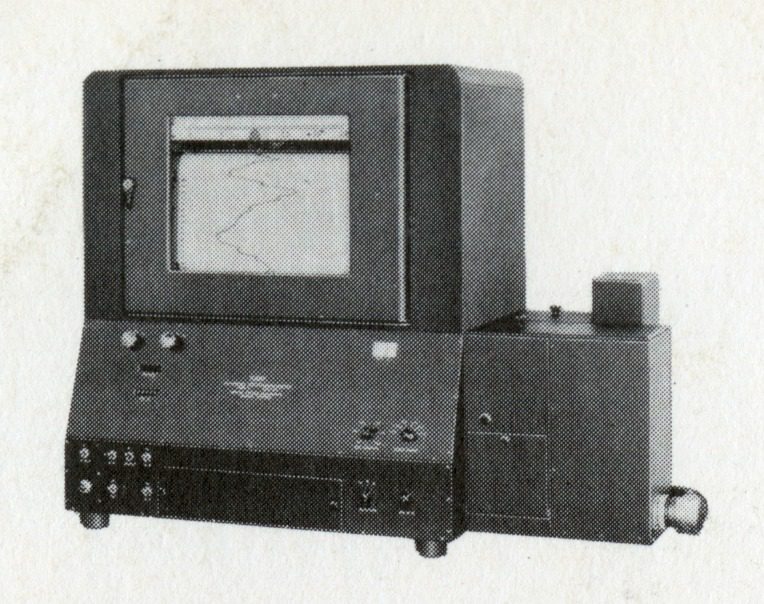
During World War II, National Technical Laboratories worked on several top-secret projects, including the production of synthetic rubber. The US government’s Office of Rubber Reserve signed a contract with NTL for the production of an infrared spectrophotometer based on a single-beam design by Robert Brattain of Shell Development Company. The first Beckman IR-1 Spectrophotometer was delivered to Shell on September 18, 1942, only six months after it was ordered. To display the data, IR-1 used a Littrow prism mounting with a single rock salt prism with a mirrored back and an analog galvanometer.
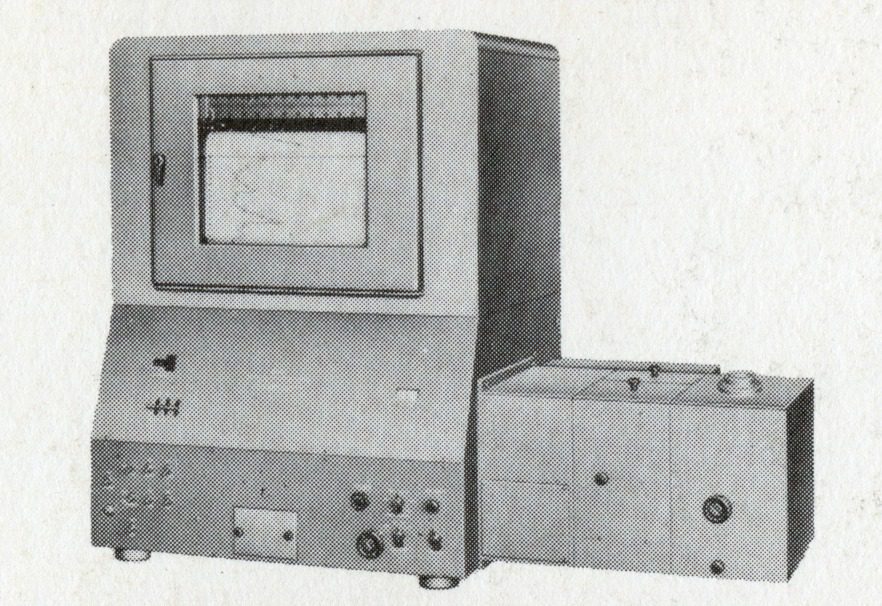
Cary and Beckman improved the design of the IR-1 spectrophotometer by combining the functions of the pH meter and the DU spectrophotometer. The IR-2 spectrophotometer, which used an electronic vacuum tube amplifier instead of a galvanometer and a thermocouple tube to detect infrared light, was put into production by 1945.
Founding of a company
In 1946, Howard Cary, George W. Downs and William Miller founded Applied Physics Corporation, which later changed its name to Cary Instruments in 1966. The company’s developers designed and produced the first commercial UV-vis spectrophotometer. This tool is used in a variety of models by industrial and institutional research laboratories worldwide.
Howard Cary and his company created numerous scientific instruments, including double-beam spectrophotometers. In April 1947, Applied Physics Corporation shipped the first Cary 11 UV-Vis spectrophotometer to the Mellon Institute in Pittsburgh. Cary 11 was followed by Cary 14 UV-Vis-NIR in 1954, Cary 15 UV-Vis in 1961, Cary 16 UV-Vis in 1964 and an expanded instrument offering in the 1970s, 1980s and 1990s of last century.
The Cary 14 spectrophotometer employed a double folded-z-configuration monochromator. It became the first commercial UV-VIS-NIR instrument that fully covered the near-infrared spectrum. The Cary Model 81 Raman Spectrophotometer significantly contributed to high-performance Raman spectroscopy.
Howard Cary co-founded the Optical Society of Southern California and served as its first president. Cary, alongside Eugene Thorburn, Armin J. Hill and Henry A. Knoll, was one of five members of the OSSC organizing committee, which was founded in June 1951. On March 25, 1952, the California Secretary of State accepted the OSSC charter, and on July 17, the OSSC was formally recognized as the eighth local section of the Optical Society of America.
From 1956 to 1957, Cary worked as a development engineer and then as vice president of development at National Technical Laboratories in Pasadena, eventually known as Beckman Instruments. At this company, he contributed significantly to the development of modern pH meters and two types of manual spectrophotometers.
Awards and distinctions
In 1958, the American Chemical Society presented Howard with the Beckman Award in Chemical Instrumentation. The award is presented annually “to recognize and encourage outstanding achievements in the development of new methods for measuring and controlling chemical processes.”
In 1959, Cary received the American Chemical Society Division of Analytical Chemistry’s Award in Chemical Instrumentation. While presenting the award, Robert Brattain described Cary’s approach to instrument design.
“First of all, he does not always pick up where others left off. Most likely, he returns to the main problem and comprehends it well enough to start his thinking and theoretical development with a simple and logical presentation of the problem. Secondly, he employs his outstanding theoretical skills. This capacity is highly known among his close colleagues, but it is probably not as widely known as it should be. Thirdly, Howard accepts what rational analysis of the problem tells him. As a result, throughout the theoretical design process, he avoids falling into the trap of blind acceptance in a particular area, and hence his projects constantly incorporate new and innovative approaches.”
In 1969, Cary received the David Richardson Medal from the Optical Society of America. Cary was honored for his “painstakingly careful and very valuable contributions to the design and production of highly precise instrumentation in areas which range from spectroscopy to chemical, medical and nuclear research.”
In 1977, Howard Cary was awarded the Maurice F. Hasler Award for his “pioneering leadership in the development of instrumentation for absorption and Raman spectroscopy”.
He served as president of the Instrumentation Society of America, executive committee member of the Western Spectroscopy Association and member of the American Physical Society, American Chemical Society, Institute of Radio Engineers and Society for Applied Spectroscopy. Howard Cary died from pneumonia on December 19, 1991, at the age of 83, leaving his wife and sister.
Howard Cary’s patents
Cary is listed on a significant number of patents for his work at National Technical Laboratories and Cary Instruments. These include:
- “Automatic pH indicator”. The patent was registered on February 18, 1941, for the Beckman pH meter.
- “Apparatus for amplifying direct current voltages and currents”. The patent was registered on February 18, 1941, for the Beckman pH meter.
- “Method and apparatus for winding resistance elements”. The patent was registered on December 9, 1952, for the Beckman pH meter.
- “Infrared spectrophotometer”, which was registered on July 31, 1951.
- “Double folded-z-configuration monochromator”. This monochromator is the heart of the Cary Model 14 UV-VIS spectrophotometer. Patent drawings of the monochromator also depict a dual-beam configuration with the optical chopper.
- “Raman spectrophotometer”, which was registered on June 14, 1960.