

Despite its name, the Australian Shepherd is a breed that truly took shape in the United States, deeply intertwined with the history of California’s ranching industry. It perfectly balances the grit of a working herding dog with the charm of an active family companion. Its massive popularity stems from its high intelligence, work ethic, unwavering loyalty, and versatility in both sports and service. The breed’s history spans centuries of migration, as herding dogs traveled alongside shepherds from Europe to the New World. Today, the modern Australian Shepherd standard is recognized by the world’s leading kennel clubs. Read more at los-angeles.name.
Origins of the Breed
The roots of the Australian Shepherd go back to the herding dogs that accompanied Spanish flocks to North America as early as the 16th century. Breed historians point to contributions from European herding dogs like the Carea Leonés, as well as Basque and Pyrenean breeds. It is from these ancestors that modern “Aussies” likely inherited their signature merle coats and striking eye color variations.
The breed as we know it today began to solidify in 19th-century California. Shepherds working with imported flocks brought herding dogs—specifically collies—from Australia and New Zealand to the U.S. Because these dogs arrived from Australia, the name “Australian Shepherd” stuck, even though the actual selective breeding happened right here on American soil. From California, the breed quickly spread across the Western states, where ranchers prized them for their ability to handle not just sheep, but cattle as well.
Rising Popularity
For over a century, the Australian Shepherd remained a dedicated working breed, largely unknown outside of rural farming communities. Everything changed in the mid-20th century thanks to rodeo performer Jay Sisler. He showcased his Aussies’ incredible skills at shows throughout the American West, capturing the public’s imagination and thrusting the breed into the spotlight.
Soon after, the Australian Shepherd Club of America (ASCA) was formed, playing a vital role in standardizing the breed. The United Kennel Club (UKC) recognized the breed in 1979, followed by the American Kennel Club (AKC) in the 1990s. International recognition from the Fédération Cynologique Internationale (FCI) soon followed.
As of 2024, the AKC ranks the Australian Shepherd as the 12th most popular dog breed in the U.S., reflecting its steady demand among both dedicated breeders and active families.

Breed Standard
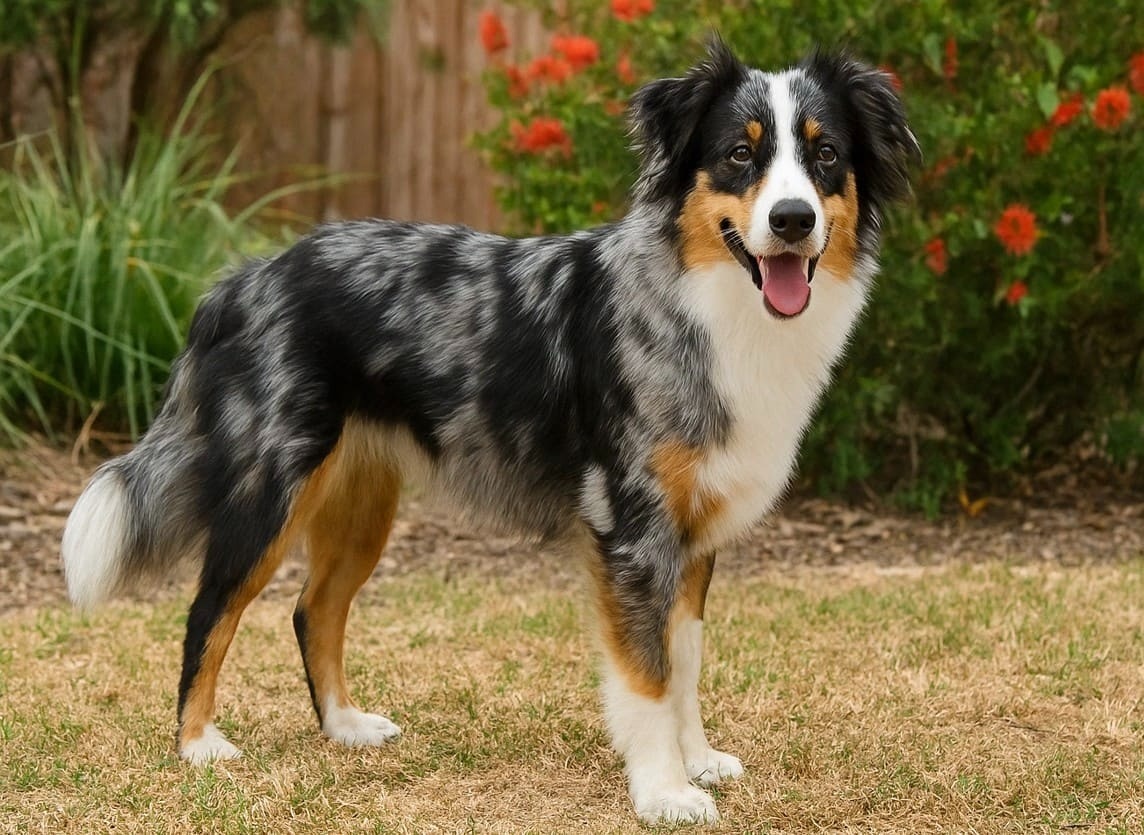
The Australian Shepherd is a medium-sized dog with an athletic, well-balanced build. According to the ASCA standard, males typically stand 20 to 23 inches at the shoulder, while females range from 18 to 21 inches. Their weight generally falls between 35 and 70 pounds.
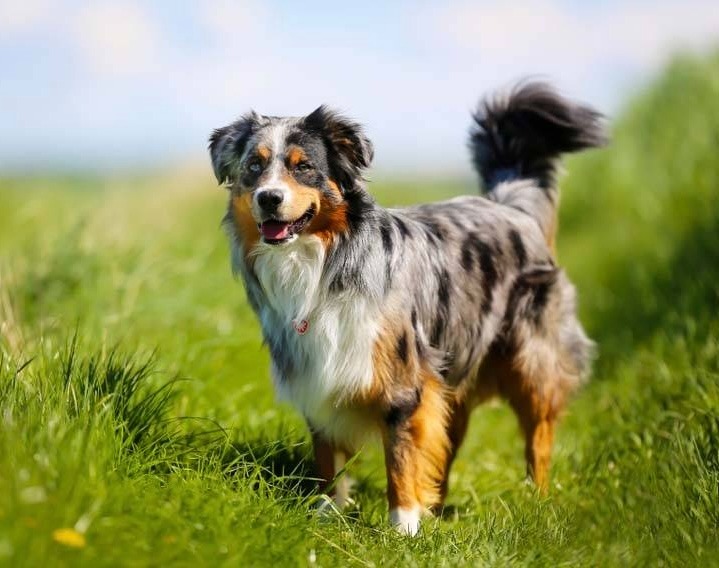
The breed features a double coat with a dense undercoat and hair that is either wavy or slightly curly. One of the Aussie’s most famous traits is its color variety: blue merle, red merle, solid black, or solid red—with or without white markings or tan points. Some Aussies are born with naturally bobbed tails. While tail docking was a tradition in the U.S., many countries have banned the practice, and long-tailed Australian Shepherds are increasingly common in show rings worldwide.

Temperament and Behavior
Aussies are famous for their intelligence, high energy, and deep devotion to their owners. Official breed profiles describe them as loyal, attentive, playful, and highly adaptable. Even when living as family pets, many retain a strong herding instinct, sometimes attempting to “herd” children or other pets. Because they are so energetic, they require plenty of physical and mental stimulation. Without an outlet for their energy, an Australian Shepherd can quickly resort to destructive behavior.
Health and Wellness
A 2024 study in the UK found that the average lifespan of an Australian Shepherd is 13.7 years, which is higher than the average for most purebred dogs.
While generally hardy, owners should be aware of common health issues like eye conditions (conjunctivitis and cataracts), as well as skin or respiratory disorders. The breed has a known genetic predisposition to the MDR1 gene mutation, which makes them highly sensitive to certain medications, including ivermectin. Genetic testing is standard for identifying this mutation. While hip dysplasia rates are relatively low compared to other breeds, responsible breeding remains essential.
A specific concern for the breed is “double merle” syndrome, which can occur when two merle-patterned dogs are bred together. These puppies often suffer from severe vision and hearing impairments, including blindness and microphthalmia. While not a lethal condition, it leads to high rates of disability. The term “lethal white” is sometimes used to describe these dogs, but the professional community increasingly views this label as inaccurate and misleading.