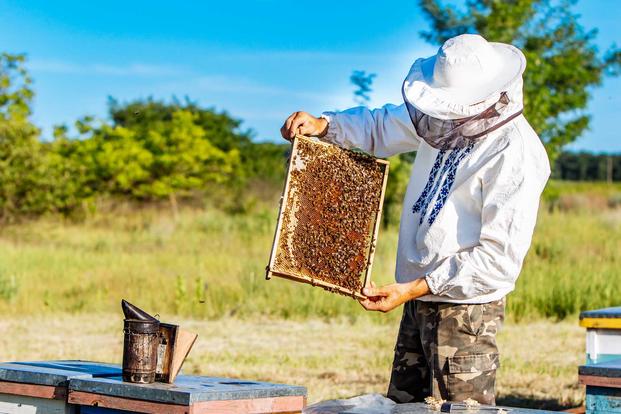
Beekeeping is not a new story for Los Angeles (LA). Even modern citizens are engaged in this business. This was confirmed by a call in 2014. Back then, a group of beekeepers demanded that the city council legalize the practice of beekeeping in residential areas of LA.
Los Angeles Name will tell more about the history of beekeeping in the city and share the most interesting facts.
Bees and LA
Did you know that bees were imported to California? The first experiment of its kind took place on July 1, 1852. It was organized by Mr. W. A. Buckley and a lady from Newburgh, New York. The couple arrived in San Francisco on the steamer New Orleans. When they left their hometown, they had three hives, so they took them with them.
There were some differences in the versions about the health of the bees themselves. Some sources said that everything was fine. Nevertheless, Lee H. Watkins refuted this opinion in 1968. In his article, California’s First Honey Bees, he stated that the prolonged keeping of bees and Mr. Buckley’s lack of experience had a negative impact on the bees’ health.
A positive experience of importing healthy bees is the story of Christopher A. Shelton, who managed to do it in 1853. He arrived by ship to San Francisco and then settled in Santa Clara County. These were the first California ancestors of the honey bee. Since then, the foothills of LA County have become a popular location for bee apiaries or ranches.
LA’s history
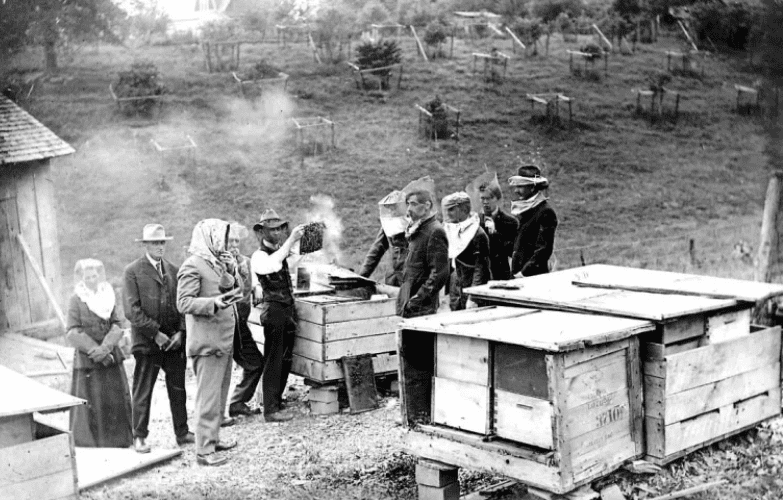
It is known that by 1860, the number of the city’s district residents engaged in beekeeping was only growing. In his book, Carey McWilliams said that beekeeping was a noble form of agriculture until 1870. For example, a bee ranch owner, starting with 100 bees, was able to quickly increase the swarm to 400 and subsequently produce 40,000 pounds of the best honeycomb honey (from October to July, i.e., in less than a year).
Interestingly, most of the honey collected in LA County was sold in San Francisco. It was a profitable business. The honey that came to the city had the highest price because of its flavor and purity.
As of 1871, LA County was considered the largest honey producer. Other counties in Southern California were also evaluated. LA held the lead for a long time. Researchers agreed that there was no easier way to make money than to run a bee ranch in those days.
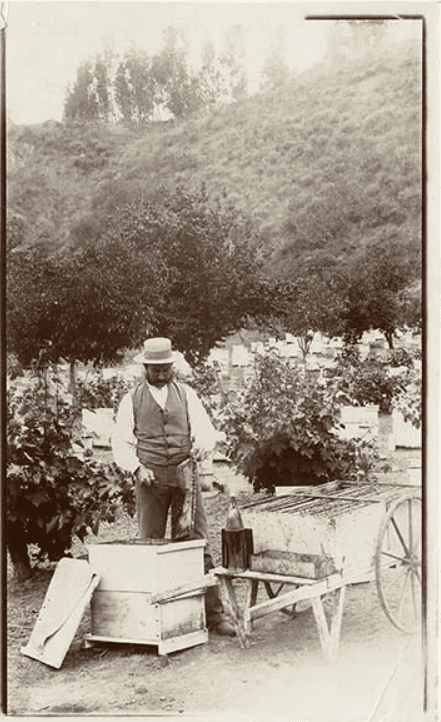
The California Historical Society (CHS) has a photo of J. McIntyre and his bees. The photo is dated 1880.
Bee equipment
As the beekeeping industry grew, so did the need for beekeeping equipment. One of the companies that specialized in its production was near the LA River. It was the Miller Manufacturing Company, which produced hives, honey extractors, smokers and other beekeeping equipment. It is interesting that among the company’s assortment, one could choose not only men’s veils but also women’s.
On August 18, 1873, the first meeting of the Los Angeles County Beekeepers Association (LACBA) was held in El Monte. The reason for this was the growing popularity of beekeeping in the city’s neighborhoods. Therefore, the LACBA’s nine members adopted the organization’s charter. By 1880, the number of members had reached 56.
Since then, the LACBA has been meeting regularly and continuously, following the Rules of Order published in 1876. The community includes people from all walks of life who love honey bees. We are talking about beginners, enthusiasts, small beekeepers and commercial ones. The members of the LACBA share their experience, energy and help themselves and others to understand more about the peculiarities of honey bee care. It is also worth mentioning that the members of the LACBA are engaged in their favorite business not only at the individual and group but also at the state, national and international levels.
Women and beekeeping
This business was different from working on a farm. Beekeeping became an option for earning money for those not treated favorably by society. Unfortunately, this is about women. Independent girls, widowed mothers, the weak and the infirm, all of them had a chance to find themselves working at the apiary. It was noted that women had to be strong enough to lift frames loaded with honey and carry empty hives.
One of the inspiring stories is about Mrs. L. Harrison. She was an experienced beekeeper and writer who shared more about the secrets of beekeeping. Her doctors gave her a disappointing prognosis. But beekeeping restored her health and strength. Later, she was able to manage a large apiary on her own.
This is not just one story. Women who suffered from unequal rights explained why they preferred beekeeping. According to them, it is a pleasant and useful activity where you can relax your body and soul. The women’s own experience of trying their hand at the apiary only increased their interest in the business and they began to enjoy the process.
Beekeeping courses
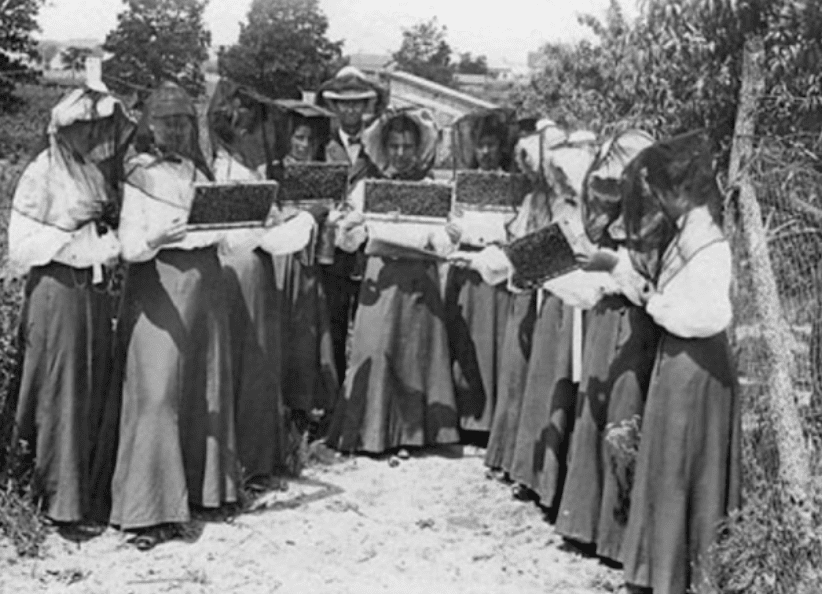
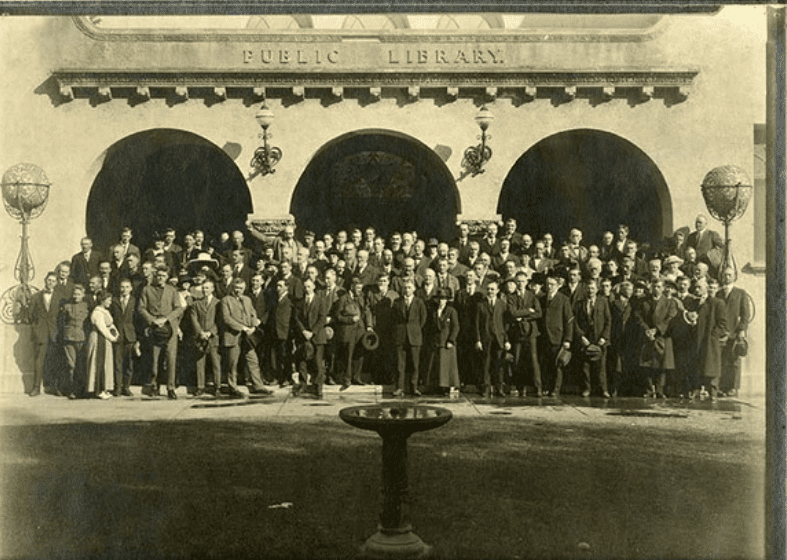
In 1919, when the troops returned from World War I, the government began to spread information about beekeeping. This occupation was recommended as a profession for soldiers, especially for veterans with disabilities.
Photographs of the first short beekeeping course held in Riverside have survived. Photos taken in December 1919 are available at the CHS.
Legalization of beekeeping in the city’s residential areas
Let us return to the appeal of the group of beekeepers. They appealed to the city council, outlining quite understandable reasons. According to the beekeepers, their work prevents the collapse of colonies and honey bees and pollinators remain in their hives. This directly affects crops important to the city (almonds, blueberries and avocados).
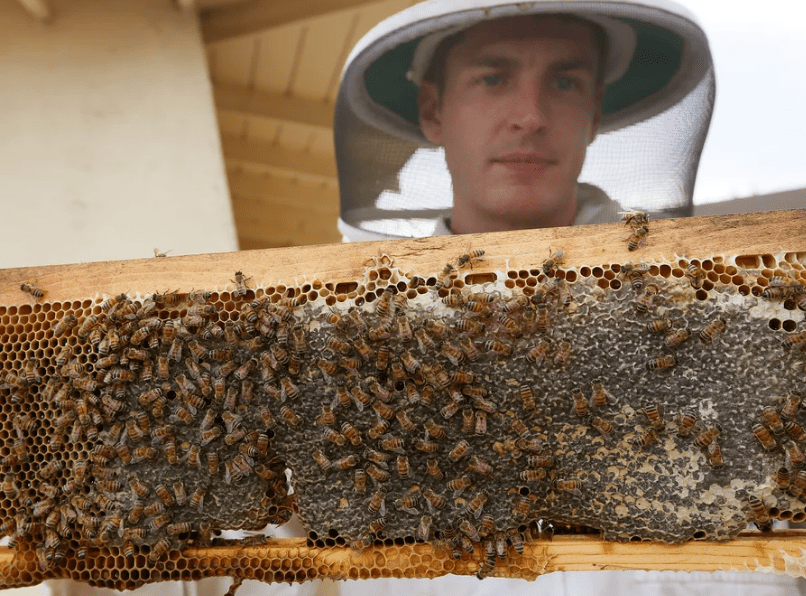
The Los Angeles City Council has agreed to revise laws that prohibit backyard beekeeping.
In October 2015, the 136-year-old ban was lifted. As a reminder, on June 10, 1879, the LA government banned beekeeping within the city limits. Interestingly, the argument was to preserve the harvest. The fact is that the affinity between bees and fruit trees was noticed. Later, scientists dispelled this theory. But the ban was not lifted.
For example, one of the local beekeepers, Rob McFarland, keeps a hive on the roof of his house in LA. This is a vivid example of how an LA resident combines everyday life with his hobby, i.e., beekeeping.
The ecological choice
Beekeeping has a long history in LA County. Initially, the townspeople were engaged in this business solely for profit. But the views of modern residents have changed. Over time, beekeeping has become an ecological choice. Beekeepers sincerely believe (and rightly so) in the benefits of local honey and its positive impact on human health, support for agriculture and the spread of healthy bees with colonies.
It is also worth adding that beekeeping is a part of therapy. It has been proven that beekeeping has the following effects on people:
- Improved social connections
- Reduced symptoms of depression or post-traumatic stress
- Decreased need for treatment or the need to visit therapists.
Even those who do not like honey should know the role of bees in the food supply. For example, they pollinate billions of dollars worth of crops (apples, blueberries, almonds, carrots and many other foods).