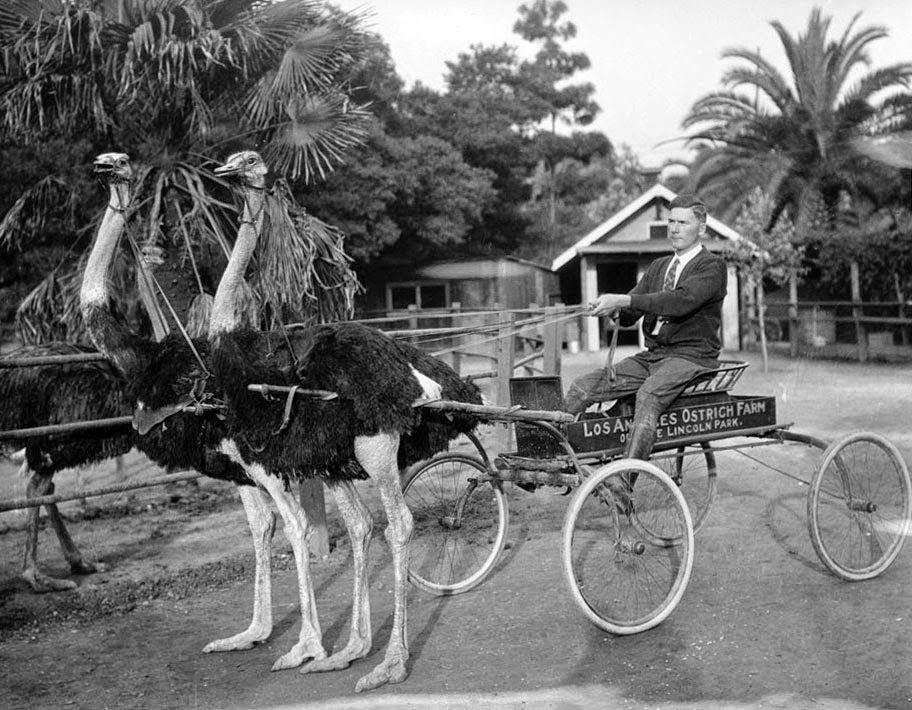
Today, modern Los Angeles residents are accustomed to rides and light shows with special effects. However, in the late 19th century, the first amusement parks in Southern California offered only seeing and riding an ostrich. Find out more at Лос-Анджелес Name.
The first ostrich farm
The Cawston Farm was the first ostrich farm in America. It was located in the Arroyo Seco Valley and spanned nine acres of land. Ostriches arrived in Southern California in 1883. It was then that the English naturalist Charles Sketchley established the farm.
The concept was so well received that investors were easily found. Among them was land developer Gaylord Wilshire (for whom the well-known Wilshire Boulevard was named). At the time, they established the California Ostrich Farming Company. Interestingly, investors contributed $80,000 to the development of this business.
The first ostrich farms, such as Cawston, became a real fashion trend for women. Ostrich feathers were popular for hats, boas and muffs back then. Before Cawston opened, these luxury accessories were shipped from the African continent.
Ostrich farms. How much did ostrich feathers cost?
Interestingly, before establishing an ostrich farm in Southern California, naturalist Charles Sketchley had comparable businesses in South Africa.
In the 1880s, ostrich feathers might cost up to $5 per piece, with one adult bird earning up to $250 per year. So this was a very profitable business, and Charles Sketchley was well aware of it.
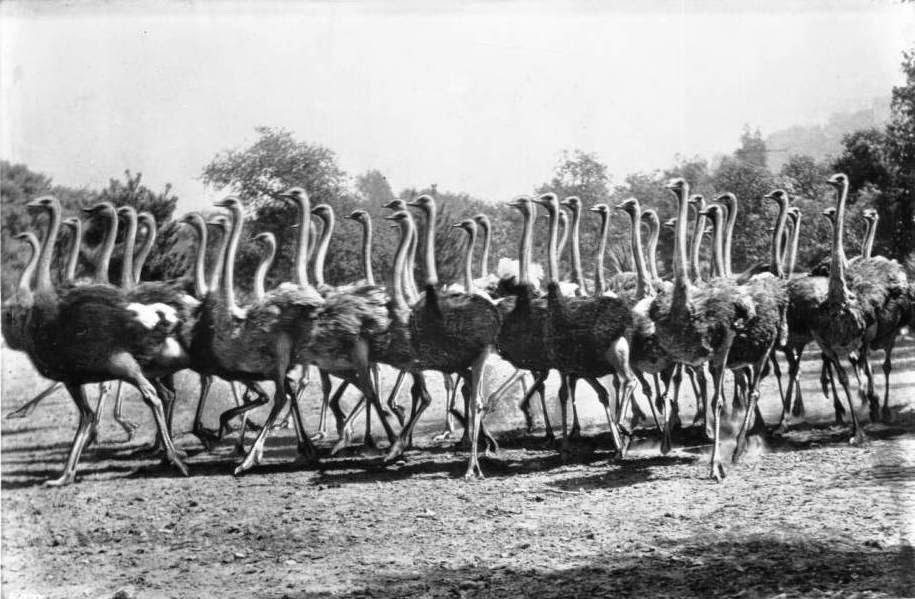
The first flock of birds arrived on March 22, 1883. They were quite resilient birds since they were able to make it through a difficult and dangerous journey. Nine of the 52 birds (26 females and 26 males) died during this difficult trip. Cawston’s obituary from 1920, on the other hand, stated that only 18 birds survived.
The flock of birds piqued the interest of local tourists. By October, the ostrich farm had between 100 and 150 visitors each day. Despite the success of the first amusement park, Sketchley encountered some challenges. Some visitors, for example, attempted to pull out the precious feathers of ostriches, and the birds were very afraid of dogs. As a result, the farmer began charging 50 cents for admission.
Cooperation with Griffith
Already in 1885, Sketchley began working with landowner Griffith. The farmer relocated his operations to Rancho Los Feliz. As a result, a new farm was built on the present site of the Crystal Springs Picnic Area (Griffith Park).
The ostrich farm attracted the attention of not only citizens but also the press. Correspondents filmed reports and expressed their admiration for the new birds. Sketchley’s farm also attracted interest from other local investors.
What happened to the Cawston Ostrich Farm
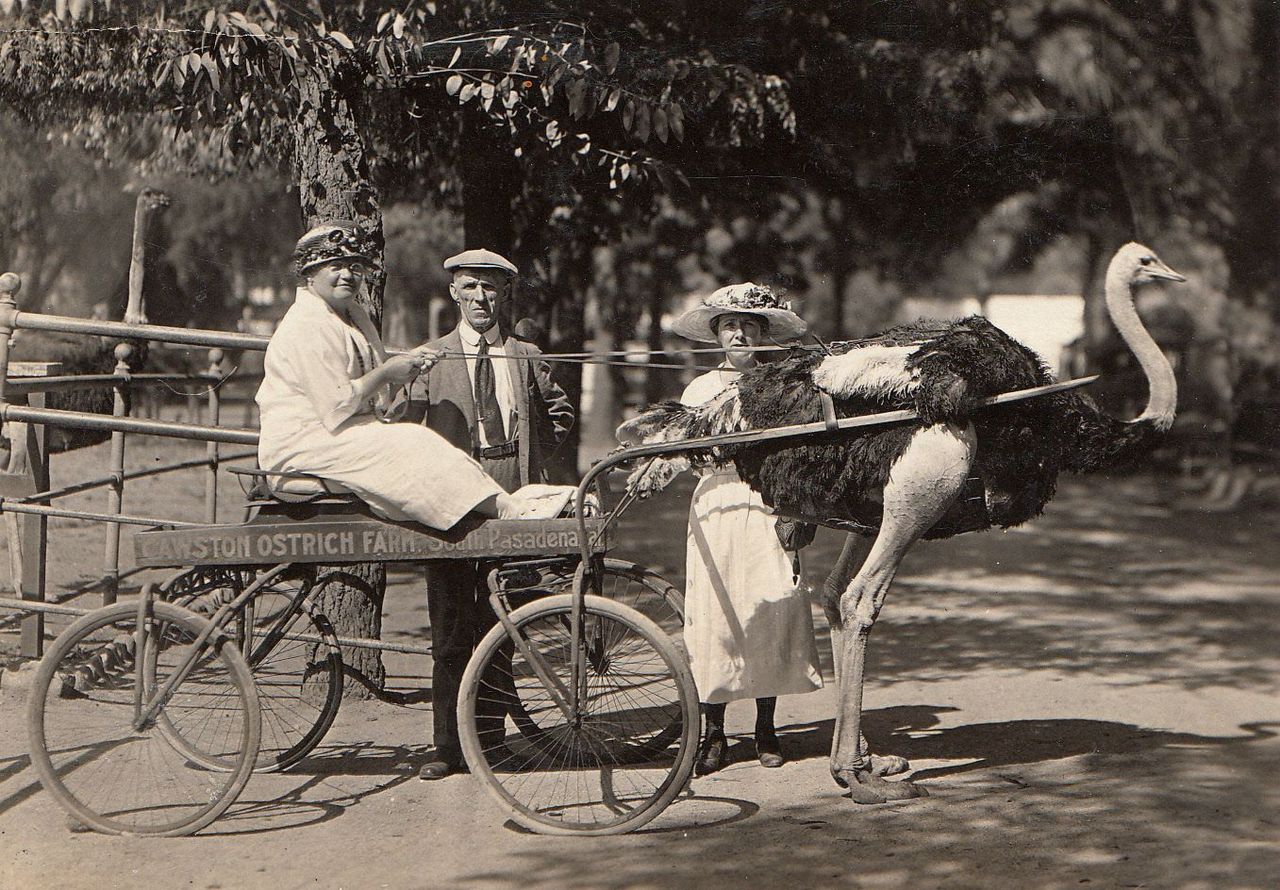
The establishment became a major tourist attraction. This was also made possible thanks to the proximity of the Pasadena tram line and the Los Angeles Railway. Among the options for entertainment during the time were:
- riding on the backs of ostriches
- riding in a carriage drawn by ostriches
- buying hats with ostrich feathers
- buing boas, capes, fans.
In fact, ostrich farm products were sold all over the world. In 1935, the Cawston Ostrich Farm was closed. Surprisingly, the majority of the structure, as well as the store, has survived and is today one of South Pasadena’s most popular cultural landmarks.
In Southern California, there were already ten ostrich farms in 1910. The fact is that the region’s climate and thriving tourist trade both contributed to the growth of such businesses. Although, the Cawston Farm was the first to become an example for others.