

In 1981, Igor Pasternak formed a volunteer airship-design bureau at the Ukrainian university Lviv Polytechnic. His company, Aeros, was one of the first private aerospace companies established during the Soviet era. In 1994, he relocated to the United States and established Worldwide Aeros Corp. in California. Then he aspired to become a major manufacturer of lighter-than-air aircraft in the US. Aeros has quickly established itself as a world leader in design, earning FAA certification for the production and distribution of the most modern airships and balloons in history. Their customer base spans the entire globe. Learn more at los-angeles.name.
Igor Pasternak is an innovator and leader in the field of airship technology. His dedication to sustainable transportation solutions, as well as his pioneering work in vertical take-off and landing (VTOL) technologies, have elevated him to the rank of aerospace industry leader. The Aeros team is a pioneer and industry leader, developing cutting-edge technology that not only creates a new type of airship but also revolutionizes cargo handling and distribution. This technology aims to reduce greenhouse gas emissions while promoting sustainability and climate change mitigation efforts. Here you can also discover more about Howard Carey, a renowned engineer in the field of medical and nuclear research.
History of the company’s foundation
In 1987, engineers in Lviv, Ukraine, began researching and developing the concept of a heavy-duty airship. Aeros was the first private aerospace and engineering company to be authorized as part of Gorbachev’s reforms in the USSR. The company’s founder, Igor Pasternak, went on to design and build balloon systems for advertising and industrial purposes.
In 1995, his company Aeros designed and built its first airship, the Aeros 50. This took place in California, and the corporation began selling advertising models of the Aeros 50 and Aeros 40A airships.
In a short period of time, Aeros designed and built the Aeros 40B Sky Dragon, the first airship with automated pressure management systems. In 2000, Aeros received FAA Type Certification for the Aeros 40B Sky Dragon airship. Following that, exports of airships to other regions of the world began. As the situation in Iraq and Afghanistan escalated, the US armed forces required cutting-edge surveillance systems. In response, Aeros developed the Aeros 1170 tethered aerostat. The US Department of Defense has signed a contract with Aeros to design and construct the High Altitude Airship.
Project Walrus HULA
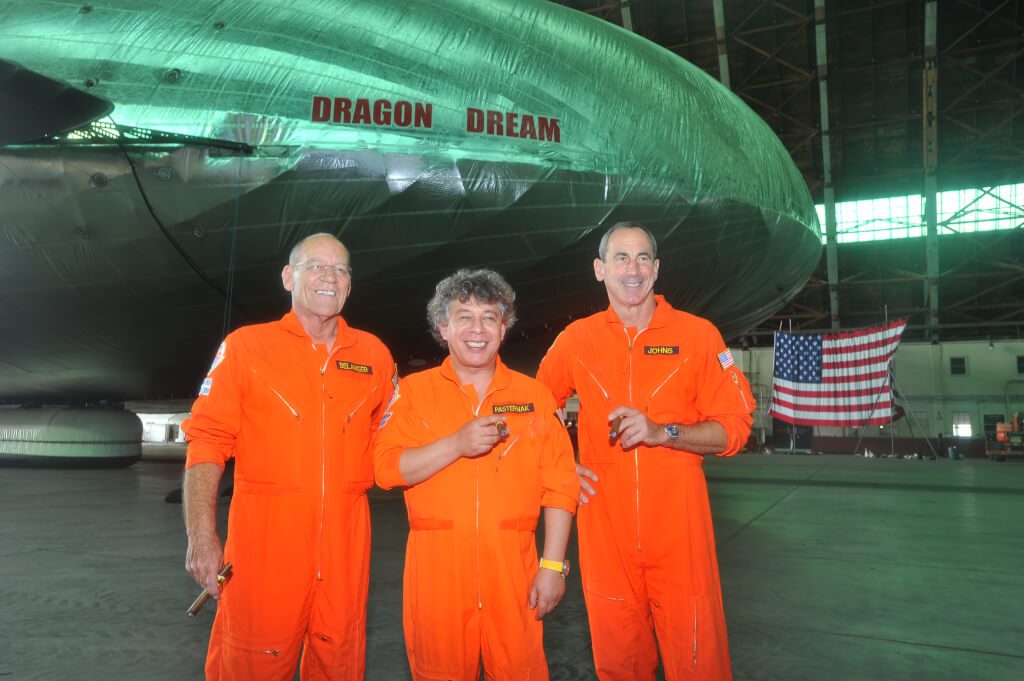
In 2005, Aeros was one of two contractors hired by the Defense Advanced Research Projects Agency (DARPA). The competition was held for the first phase of the Walrus project, which involved the building of a prototype airship with variable buoyancy that implemented a system known as Control of Static Heaviness (COSH). The finished project, known as the Dragon Dream Aeroscraft Prototype, was a part of the Pelican Program and had its successful flight debut in 2013.
During the same time period, Aeros built an impressive patent portfolio encompassing rigid airship frameworks, air-bearing landing systems and, most crucially, the COSH flight system for a variable buoyancy air vehicle.
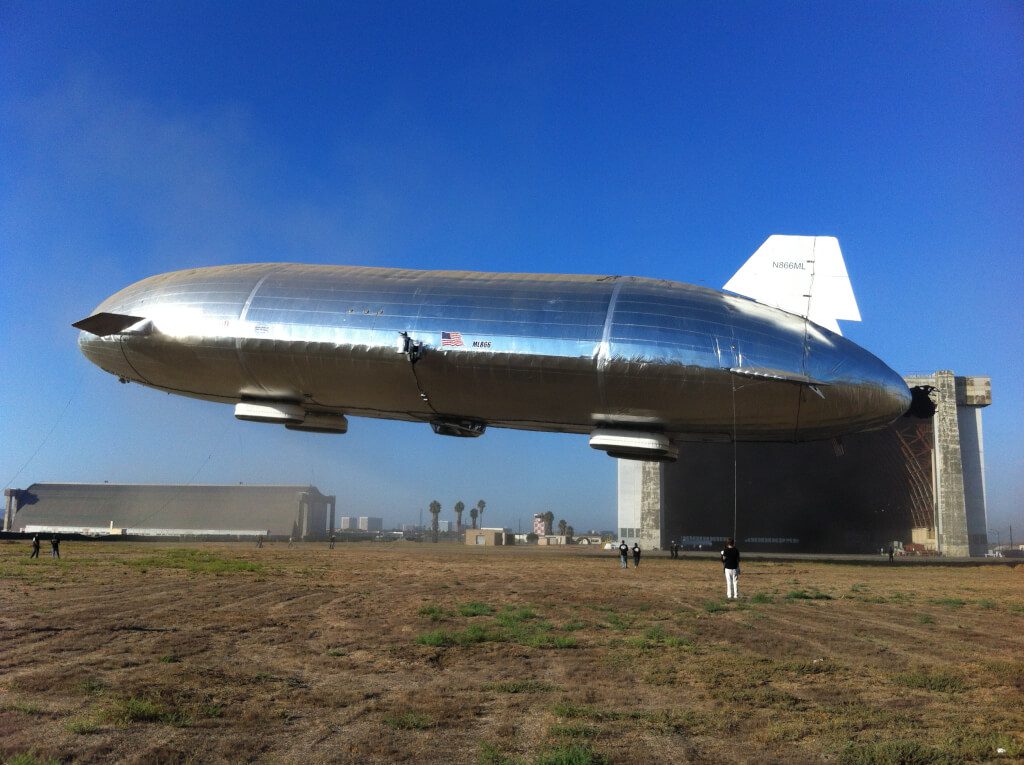
Based on their experience with Dragon Dream, the company produced Aeroscraft, a family of COSH airship designs that can be scaled and customized for a variety of commercial, civil, military and private purposes.
The Walrus project was halted in mid-2006 after its first phase was completed. The second phase was canceled in order to focus on enhancing the design, technological development, risk-reduction demonstrations of components and systems and flight tests of a scalable airship with advanced technology demonstrations.
Aeroscraft
To meet the Walrus phase Il goals, the Aeros team developed design concepts for larger COSH airships. The team also developed COSH airship concepts to meet the Navy’s HULA goals for heavy-lift airships aiding maritime operations. These larger military prototypes implemented a consistent design concept that evolved along with the closely related family of large commercial Aeroscraft airships.
Aeros started working on a commercial scale, Aeroscraft. At the September 2007 National Business Aviation Association (NBAA) trade exhibition in Atlanta, Georgia, they introduced the ML866. The aircraft features a main cabin that can be customized to meet the needs of the customer and has over 5,382 square feet of space.
According to Aeros, the technologies demonstrated by Dragon Dream enable Aeroscraft to fly up to 6,000 nautical miles while performing true vertical takeoff and landing at maximum payload. They can fly over untrained terrain and discharge massive cargo exactly in the area of demand. Aeroscraft operational airships are outfitted with an internal cargo compartment and a cargo suspension deployment system that enables land or sea delivery.

In 2014, the Aeros team reported that the ML866’s design was complete and that a “design freeze” had been implemented. In September 2015, Aeroscraft chief executive Igor Pasternak stated, “We are pleased to announce that production is continuing on the ML866, and we aim to achieve FAA operational certification for the first deployed Aeroscraft in about five years.” Three years later, it became evident that Aeros had shifted its focus to designing and testing the system and subsystems rather than manufacturing the entire airship.
On August 8, 2018, Aeroscraft announced that they had finished the early design phase of the Aeroscraft Gen 2 Cargo Airship. The team then stated that they would enhance buoyancy control, flight surfaces and modular cargo systems. The aircraft will also operate with zero emissions, making it the first totally green technology capable of transporting cargo over large distances. Aeros’ next steps, like those of several other large airship manufacturers with mature, nearly ready-to-use designs, are dependent on finding a commercial or military sponsor. The role of the sponsor is to take on the financial risk and provide significant funding for the construction, testing and certification of the first large Aeroscraft airship.
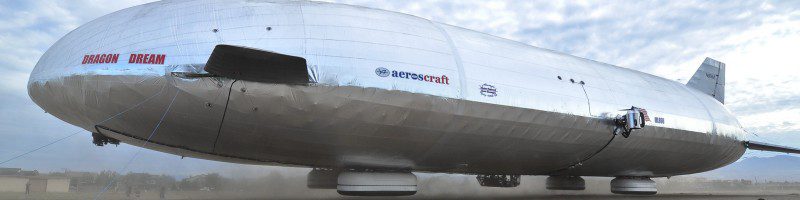
On March 11, 2008, Aeros announced that their Aeroscraft ML866 type certification application had been accepted by the FAA. The goal was to certify the ML866 as a new type of aircraft. In an August 2020 Robb Report article, Aeroscraft stated that it would take several years before receiving FAA passenger travel certification. The initial purpose is to transport passengers across the Hawaiian Islands.
Aeros designs and manufactures advanced generation 3 tethered aerostat systems (TAS). Aeros TAS technology, which is often reserved for the military, is now available for civilian use around the world.
Neona Sky Yacht
This prospective aircraft supports the values of fuel efficiency and utility, which are inspired by Aeros’ experience in designing commercial cargo airships. However, the emphasis is placed on the positive experience of its passengers.
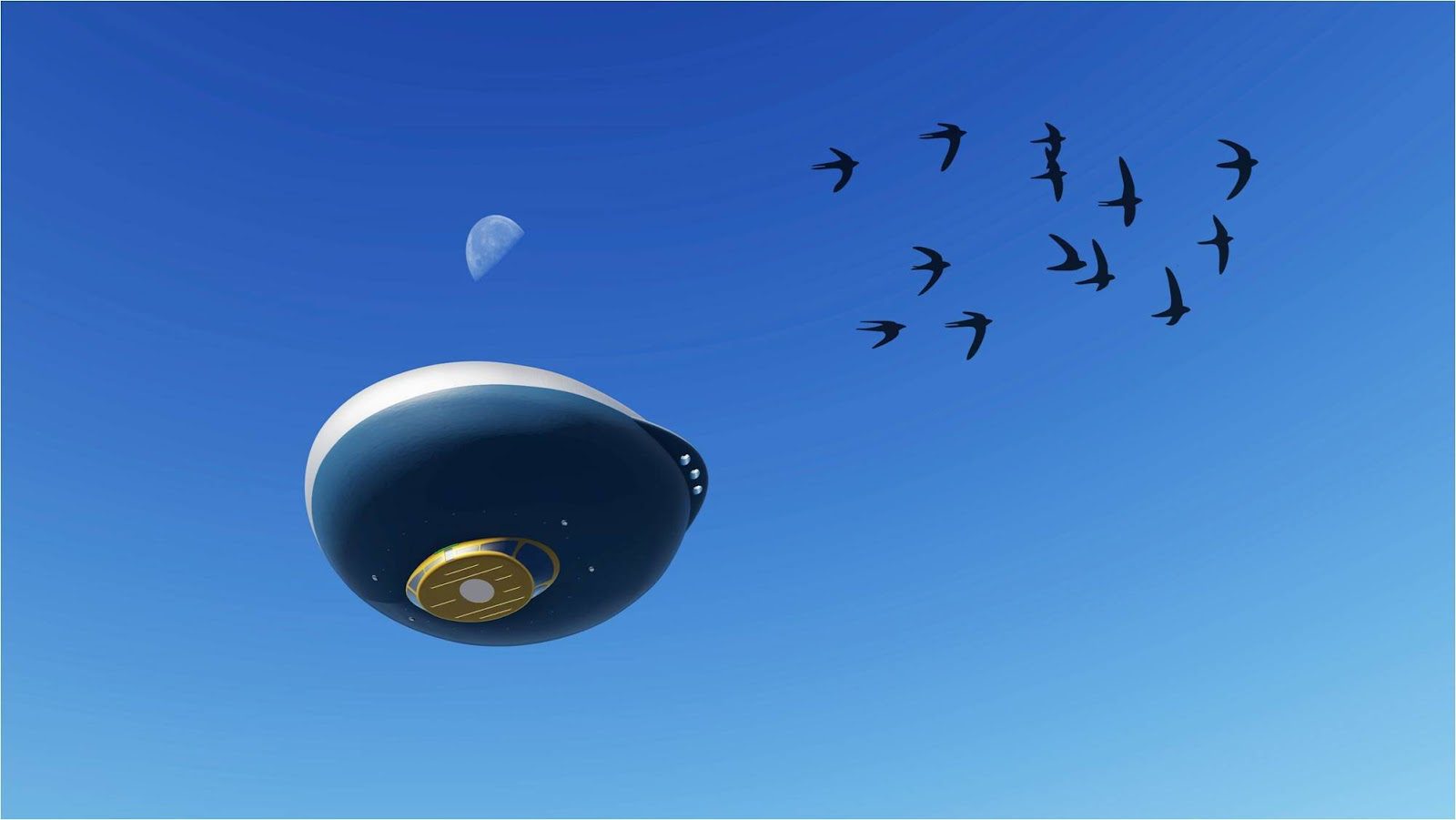
Neona Airship represents a new era in luxury travel and VIP tours. This flying yacht has an exceptionally flexible structure that allows for an appropriate distribution of both private and public spaces, resulting in the ideal aircraft for the discerning traveler looking for something new. The airship’s design is similar to a UFO.