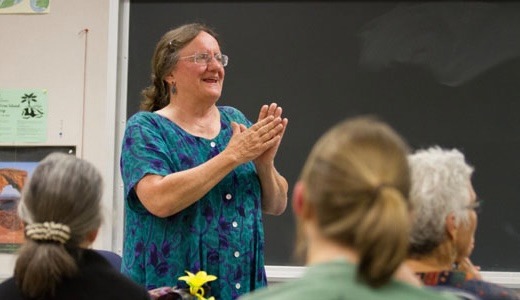
Tanya Atwater holds a unique place among the scientists who fundamentally changed our understanding of the Earth. She was one of the first women to explore the ocean floor through the lens of geology. Her research on plate tectonics, the formation of oceanic crust, and the geological evolution of North America laid the groundwork for modern geophysics. Atwater combined profound scientific discoveries with innovative educational approaches, creating unique multimedia tools to help us visualize our planet’s movements. Read more at los-angeles.name.
Biography
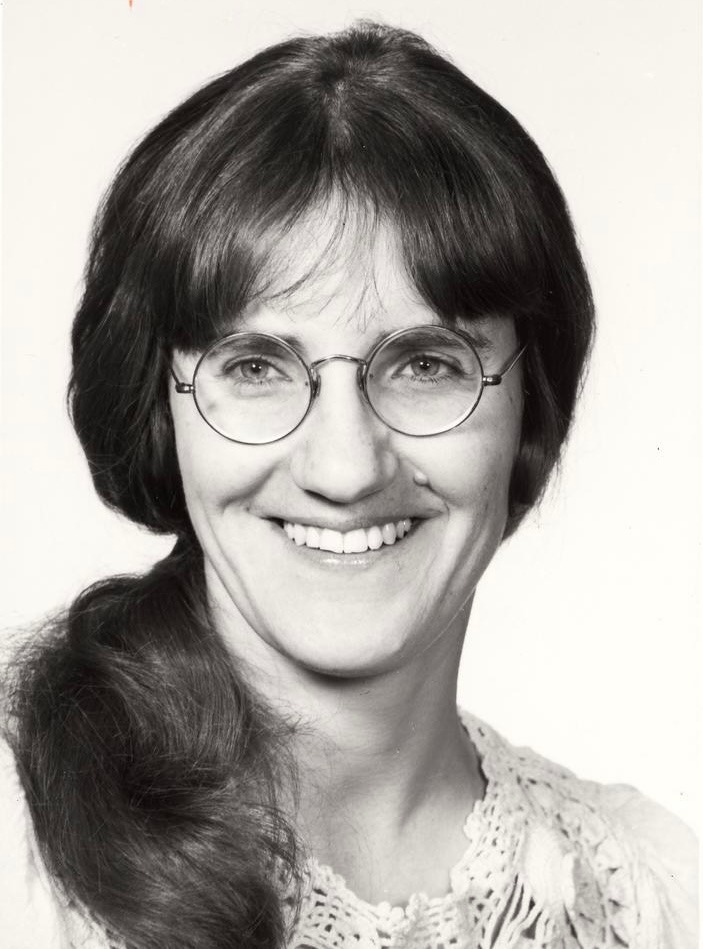
Tanya Atwater grew up with an engineer father and a botanist mother, instilling in her a love for science from a young age. Her childhood was filled with adventure. The family spent weekends and vacations camping, hiking, horseback riding, and river rafting, always choosing wild, remote locations. This nurtured her love for the outdoors, her independence, and her teamwork skills. Initially, Atwater dreamed of becoming an artist. She took every drawing class she could and developed a fascination with spatial relationships—a skill that would later become foundational to her geological thinking. On family trips, she naturally fell into the role of navigator, translating maps into real-world landscapes. Her love for precision and analytics eventually guided her toward science, but it was a chance encounter with geology at a summer school in Montana that set her professional path in stone.
She began her studies at the Massachusetts Institute of Technology (MIT) in 1960. Five years later, she earned her bachelor’s degree in geophysics from the University of California, Berkeley. Atwater continued her education at the prestigious Scripps Institution of Oceanography at the University of California, San Diego, completing her Ph.D. in marine geophysics in 1972.
Atwater’s academic career took off quickly. She first taught at MIT before joining the geological sciences faculty at the University of California, Santa Barbara (UCSB) in 1980. She would later lead the Educational Multimedia Visualization Center at UCSB.
Scientific Career
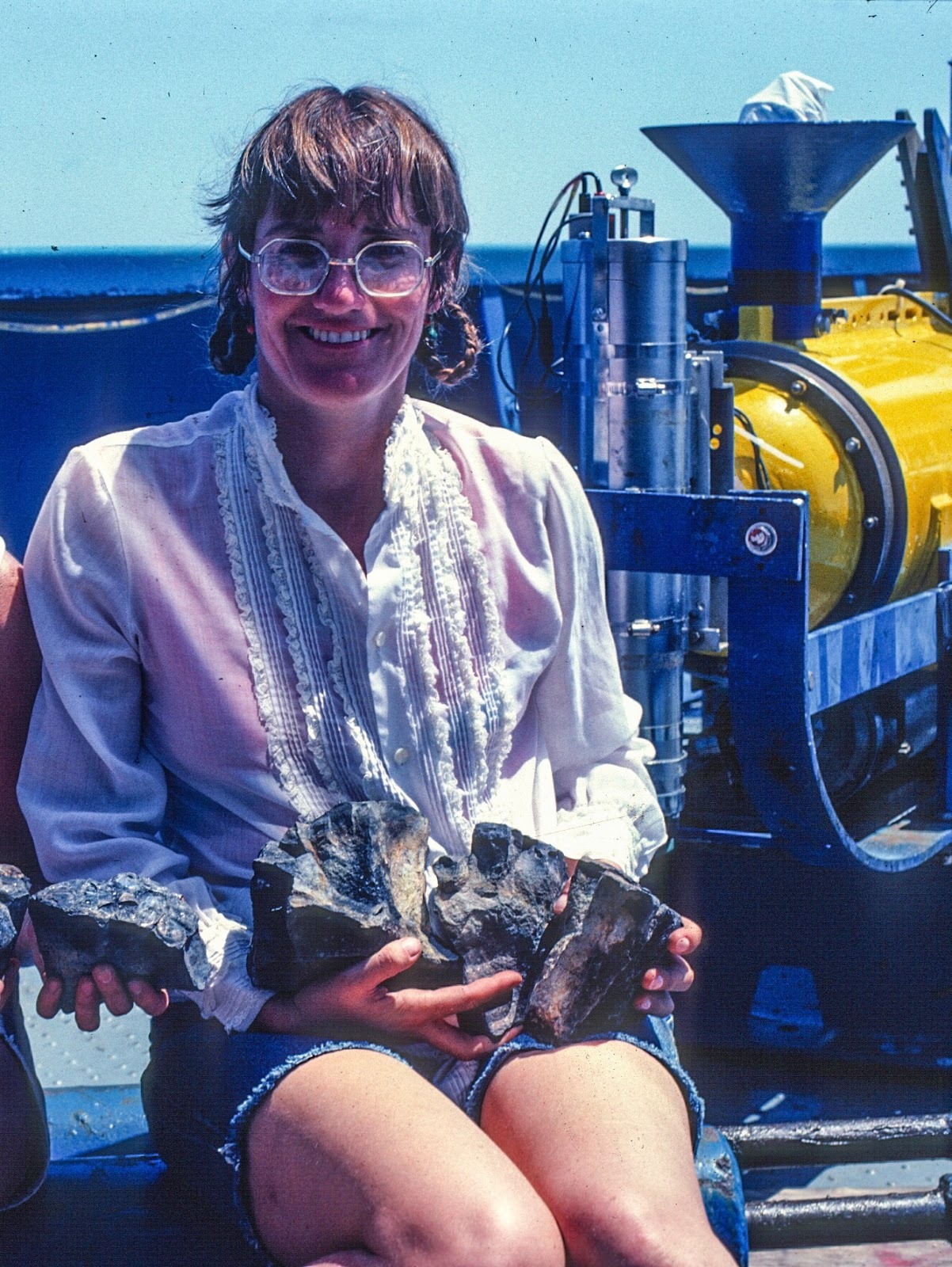
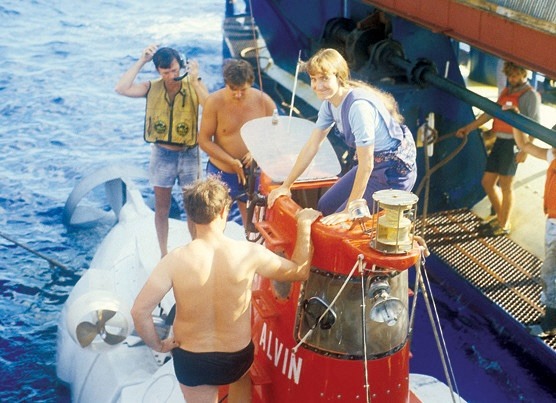
Over the course of her oceanographic expeditions, Tanya Atwater participated in twelve deep-sea dives using the submersible Alvin to study the structure of the ocean floor. In 1968, she co-authored a revolutionary paper that described the fault patterns in seafloor spreading zones. This discovery was fundamental to understanding how new oceanic crust is formed.
Alongside colleagues Jack Corliss, Fred Spiess, and Kenneth Macdonald, she participated in the RISE project, which led to the discovery of hydrothermal vents, famously known as “black smokers.” This finding was sensational. It revealed an entire ecosystem on the ocean floor thriving without sunlight, sustained instead by chemical energy from deep within the Earth. Another major breakthrough was her work on the nature of rifts near the Galápagos Islands. She demonstrated that these structures form when tectonic forces or magma eruptions disrupt plate motion, forcing the spreading zones to change direction. This insight finally explained the complex, puzzling patterns of the ocean’s crust.
Atwater was a trailblazer in the male-dominated field of marine geophysics. She faced significant restrictions—women were often barred from research vessels—but she staunchly defended her right to work alongside her male colleagues. With support from her family and bolstered by legislative changes, she broke down these barriers. Over her career, she witnessed a dramatic increase in the number and diversity of women entering the sciences.
The Tectonic History of North America
Atwater earned global recognition for her research into the tectonic history of western North America. Her seminal paper, “Implications of Plate Tectonics for the Cenozoic Tectonic Evolution of Western North America,” became the cornerstone for understanding the region’s development. She pieced together how, beginning around 40 million years ago, the Farallon Plate was diving beneath North America. Its southern section eventually vanished completely under California, while its northern remnant became the Juan de Fuca Plate.
This breakthrough explained the origin of the San Andreas Fault, the massive boundary separating the Pacific and North American plates. Her work provided the key to understanding how plate movements sculpted the continent’s modern geological features, from the Rocky Mountains and Yellowstone to Death Valley and the Cascade volcanoes.
Educational Outreach
Tanya Atwater has always believed that science must be accessible. She founded the Educational Multimedia Visualization Center at UCSB, where she developed digital models that show tectonic plate movements through geologic time. Her interactive maps and videos help students around the world visualize complex geological processes that are otherwise impossible to observe directly.
Her innovative approach to teaching earned her the National Science Foundation Director’s Award for Distinguished Teaching Scholars in 2002. The prestigious award came with $300,000 in funding to further develop educational programs that integrate science and technology.
Throughout her career, Tanya Atwater received numerous honors, including:
- Sloan Fellowship (1975–1977) in physics;
- Newcomb Cleveland Prize from the American Association for the Advancement of Science (1980);
- Election to the National Academy of Sciences (1997);
- Gold Medal from the Society of Woman Geographers (2005);
- Penrose Medal (2019) — the highest honor from the Geological Society of America;
- Wollaston Medal (2022) from the Geological Society of London;
- Membership in the American Academy of Arts and Sciences (2023).
Her contributions to both science and education have served as an inspiration for generations of female scientists, encouraging them to overcome barriers in a field once dominated by men. Her discoveries continue to shape scientific theory, while her educational materials help thousands of students across the globe understand the complex and beautiful history of our planet.