

It’s hard to find someone who hasn’t heard of the California roll. For many Americans, this roll was their very first introduction to sushi. Yet, despite its global popularity, a heated debate rages among Japanese cuisine purists: can this roll be considered authentic sushi, or is it merely an American invention with only a faint echo of Japanese tradition? Among all the gastronomic innovations of the 20th century, the California roll holds a special place. It’s not just a dish—it’s a symbol of culinary fusion, an example of how Japanese tradition can blend seamlessly with American tastes. More at los-angeles.name.
The Controversy Over its Inventor
The history of the California roll is a culinary mystery. Who exactly created this legendary dish? The answer isn’t as simple as it seems. The first mentions of the California roll are believed to have appeared on November 25, 1979, in the Los Angeles Times and Florida’s Ocala Star-Banner. Less than a month later, the Associated Press credited its creation to chef Ken Seusa of Kin Jo restaurant in Hollywood. According to the restaurant’s manager, Ms. Fuji Wade, he was the one who transformed simple sushi into a new gastronomic sensation. For over two decades, this was considered the only true story.
However, many Japanese culinary historians point to a different chef: Ichiro Mashita of the Tokyo Kaikan restaurant in Little Tokyo, Los Angeles. According to his assistant, Teruo Imaizumi, Mashita began experimenting with ingredients back in the 1960s, substituting avocado for expensive toro tuna. This was the birth of the modern roll’s prototype—featuring diced avocado, crab meat, and cucumber, served not as a classic makizushi, but in a roll form. This recipe gradually evolved over time.
A Revolution in the World of Sushi
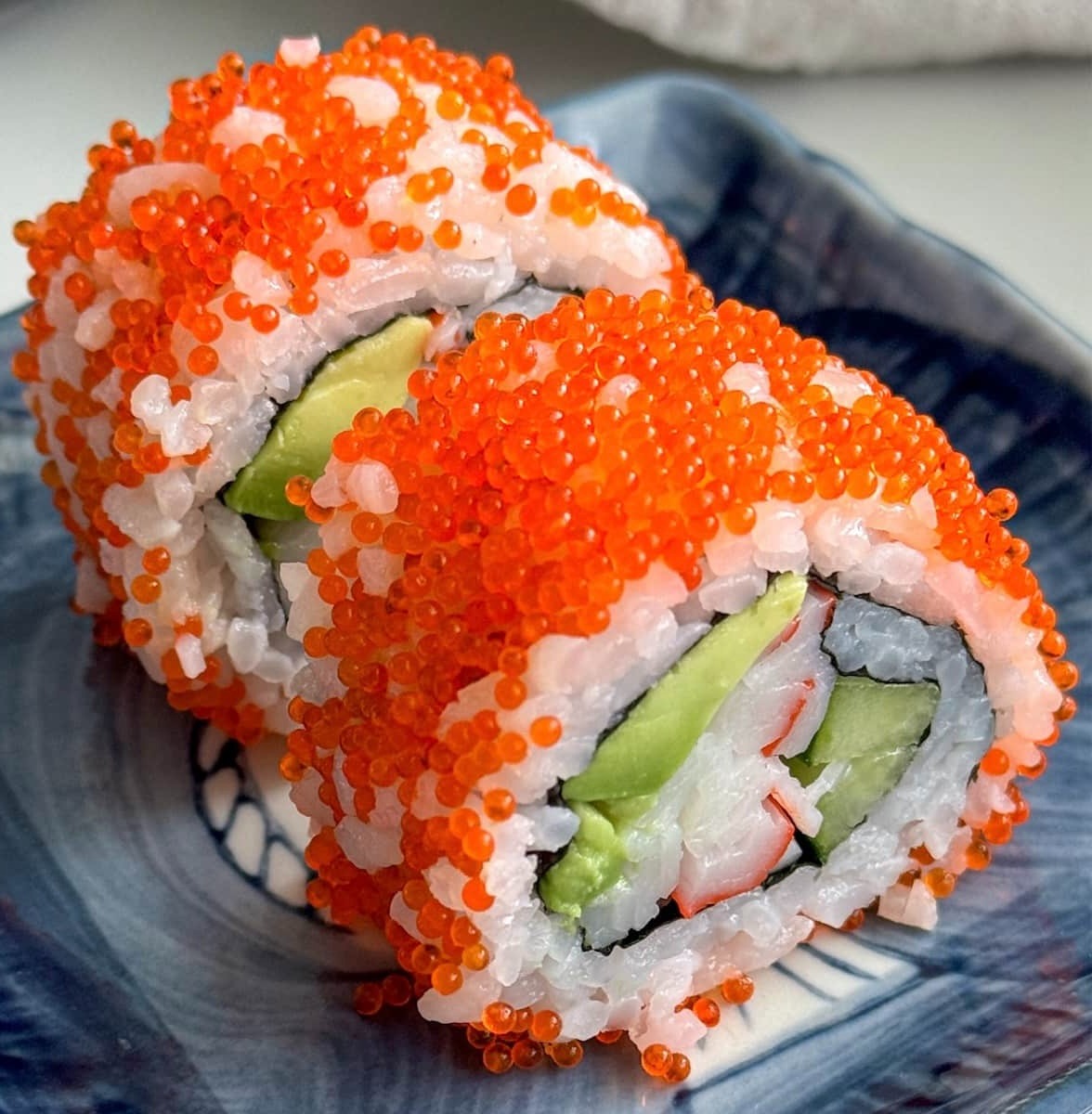
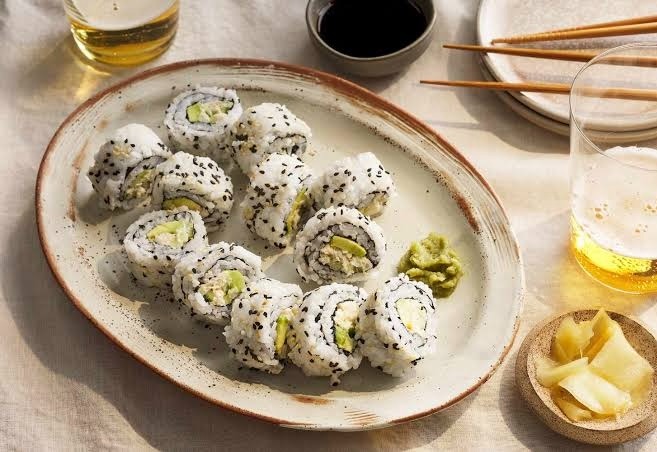
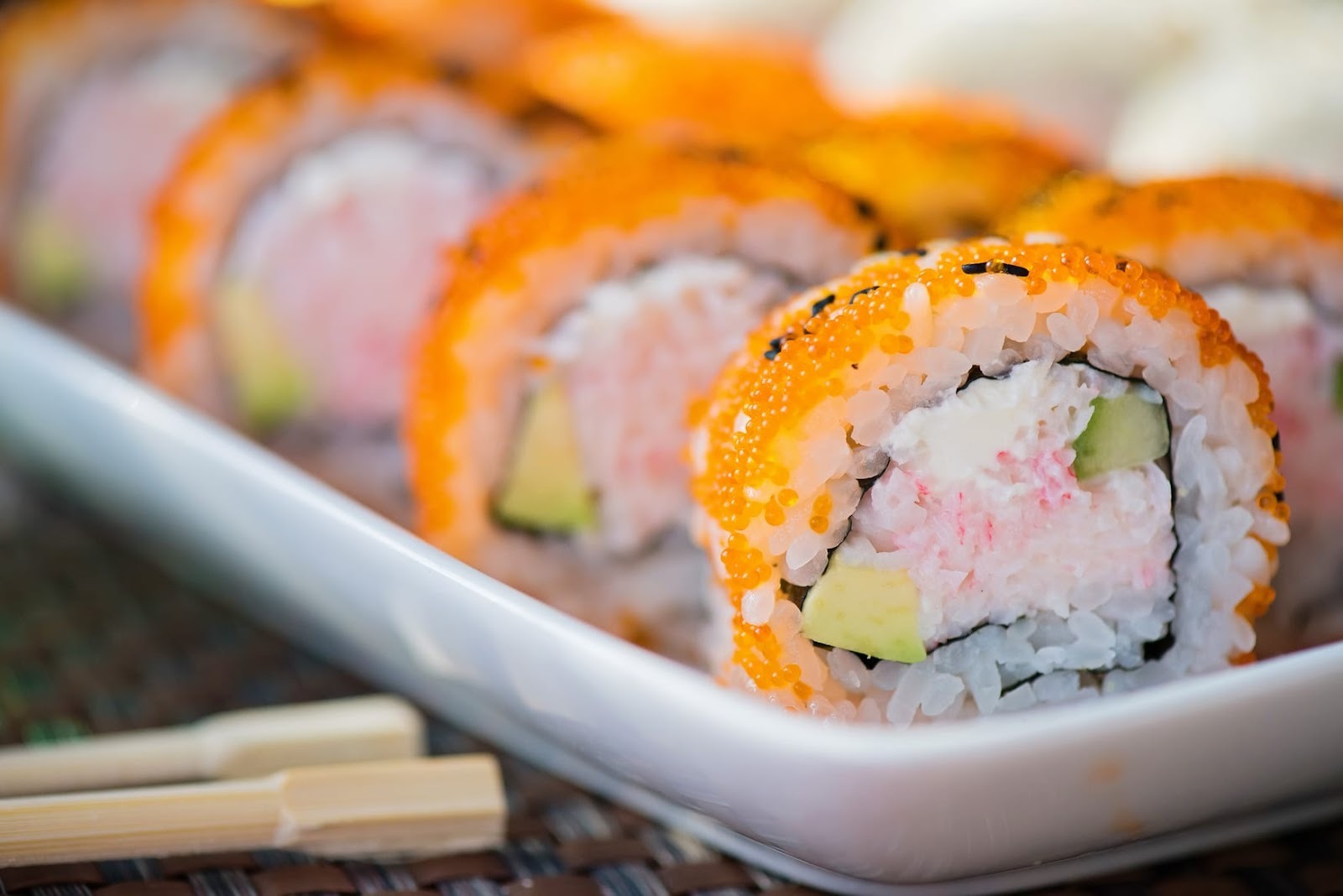
Initially, the California roll was served traditionally, with the nori (seaweed) on the outside. But American customers weren’t used to the sight of black seaweed and would often peel it off. This prompted chefs to create a new presentation: the uramaki, or “inside-out” roll. In this version, the nori was hidden inside, with the rice on the outside, making the dish far more appealing to a Western audience. This format eventually became the standard for the California roll. This innovation is also credited to Ichiro Mashita, who understood that adaptation was the key to Japanese cuisine’s success in America. Thus, the first “inside-out roll” was born—a new style of sushi that opened the door to Japanese flavors for millions of Americans.
Another popular claim comes from Japanese chef Hidekazu Tojo, who settled in Vancouver in 1971. He asserted that he created the California roll in his restaurant in the late 1970s, when he decided to “flip” the sushi to make it more appealing to Western clients. According to him, he was the first to combine cooked crab, avocado, and cucumber in the “inside-out” format. He claims he named the roll using the abbreviation C.A. for Crab & Avocado, which conveniently also stood for the state of California. While his story is compelling, culinary historians maintain that the dish already existed in various forms in Los Angeles. Despite this, Tojo gained international acclaim. In 2016, Japan’s Ministry of Agriculture, Forestry and Fisheries named him an honorary ambassador of Japanese cuisine. In 2024, the documentary “The Chef and the Daruma” was released, blending archival footage and reenactments to tell Tojo’s life story, showing how one man influenced North America’s gastronomic history.
Spreading Across the U.S.
Regardless of who was first, the California roll quickly won the hearts of Americans. It became a massive hit in Southern California in the late 1970s, and by the 1980s, it was being served in leading restaurants across the U.S. Gourmet magazine featured it in 1980, and a year later, The New York Times dubbed it “sushi for beginners.” The California roll is largely responsible for popularizing Japanese cuisine in America. It was the perfect introduction to sushi for many: mild, free of raw fish, and made with avocado and crab—ingredients familiar to the Western palate. This sparked a trend that transformed sushi from an exotic curiosity into a mainstream culinary culture.
Interestingly, the California roll eventually “returned” to Japan. There, it is known as California maki or Kashū maki and is seen as a symbol of the Western adaptation of Japanese cuisine. For the Japanese, it’s not just a dish—it’s proof of how their culture can influence the world and be transformed in the process.
Cultural Significance
The California roll is more than just sushi. It’s a cultural bridge between East and West, a gastronomic symbol of the internationalization of taste. Its creation reflects a process of mutual cultural influence: Japanese aesthetics merged with American pragmatism, giving traditional cuisine a new life.
It opened the door for other fusion variations—rolls with mango, cream cheese, smoked salmon, tuna, and even just vegetables. Today, you can find the California roll in almost every country, from New York to Tokyo. And while the debate over its true creator continues, the roll’s greatest achievement is its power to unite people through food.