

Hidden deep within Southern California’s San Gabriel Mountains lies one of the most fascinating chapters of America’s gold mining era—the abandoned Big Horn Mine. Today, this captivating site doubles as a popular hiking destination within the Angeles National Forest. Despite its weathered appearance, the mine still echoes the relentless energy of the late 19th-century gold rush, a time when the hunt for precious metals shaped the region’s destiny. The mine’s history is a compelling blend of genuine geological discovery, local lore surrounding its founder, and a classic boom-and-bust economic cycle. Read more on los-angeles.name.
Discovery and the Early Years
Historical records show that gold was discovered here in the late 1890s. Credit goes to prospector Charles Tom Vincent, who allegedly stumbled upon the vein while hunting bighorn sheep in the mountains. This fortunate excursion gave the Big Horn Mine its name. Over the years, plenty of folklore has spun around Vincent and his mine, with tales tracking his past as a Civil War veteran and his dramatic adventures on the American frontier. However, historians note that many of these colorful stories lack hard documentary proof.
Work on the site began in earnest in the mid-1890s, riding a fresh wave of mining activity sweeping through California. The operation quickly grew into one of the largest mining ventures in the San Gabriel Canyon area. Geologically, the Big Horn Mine sat right on a fault zone, where intense tectonic activity and metamorphic processes had fractured the rock. These harsh conditions were perfect for creating the gold-bearing quartz veins that drew early prospectors. Unlike the loose gravel and sediment deposits found in California’s Central Valley during the famous 1848–1855 Gold Rush, the gold here was locked in solid rock veins. This made extraction incredibly difficult and required heavy-duty industrial machinery.
The Expansion Boom
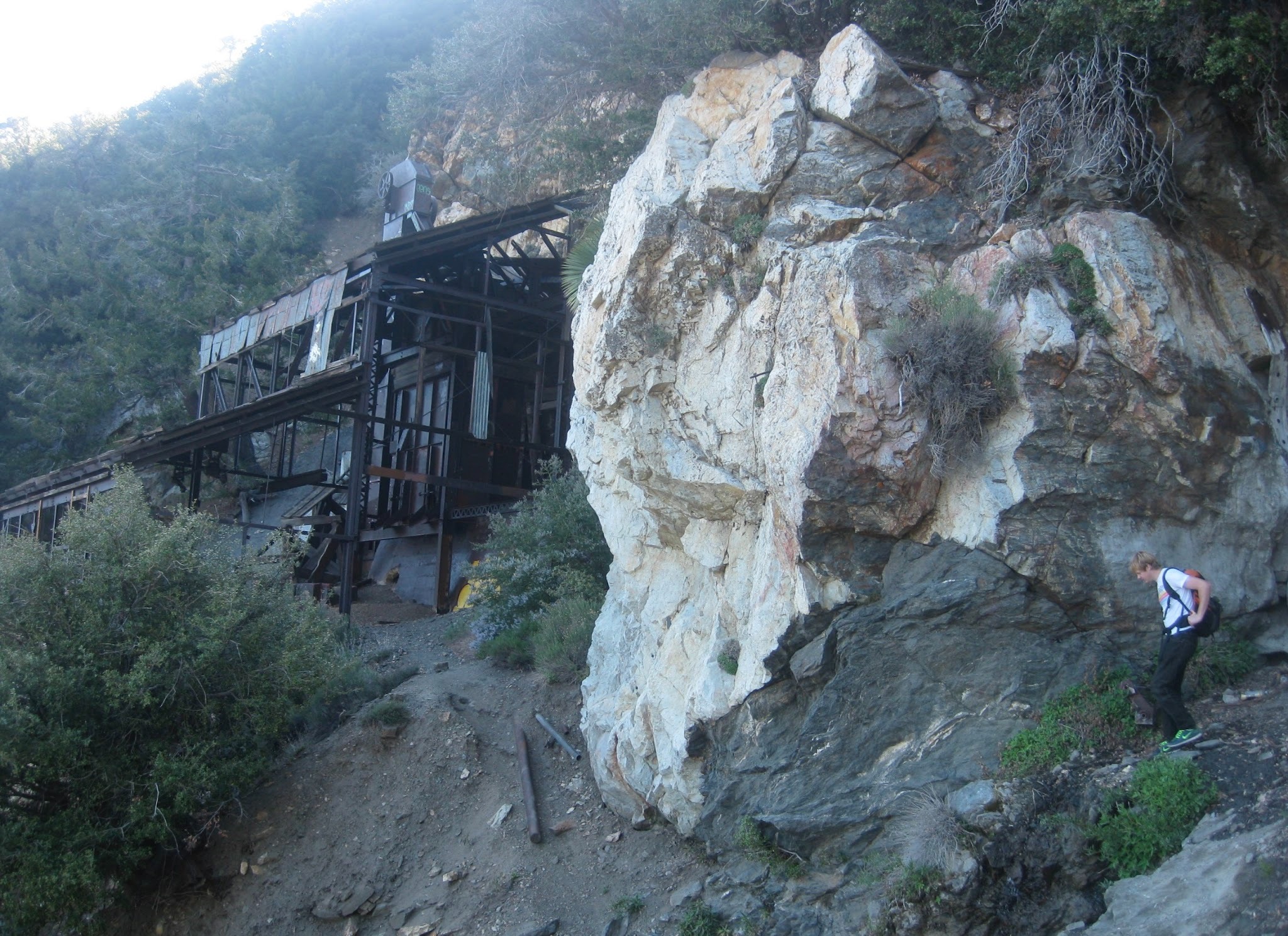
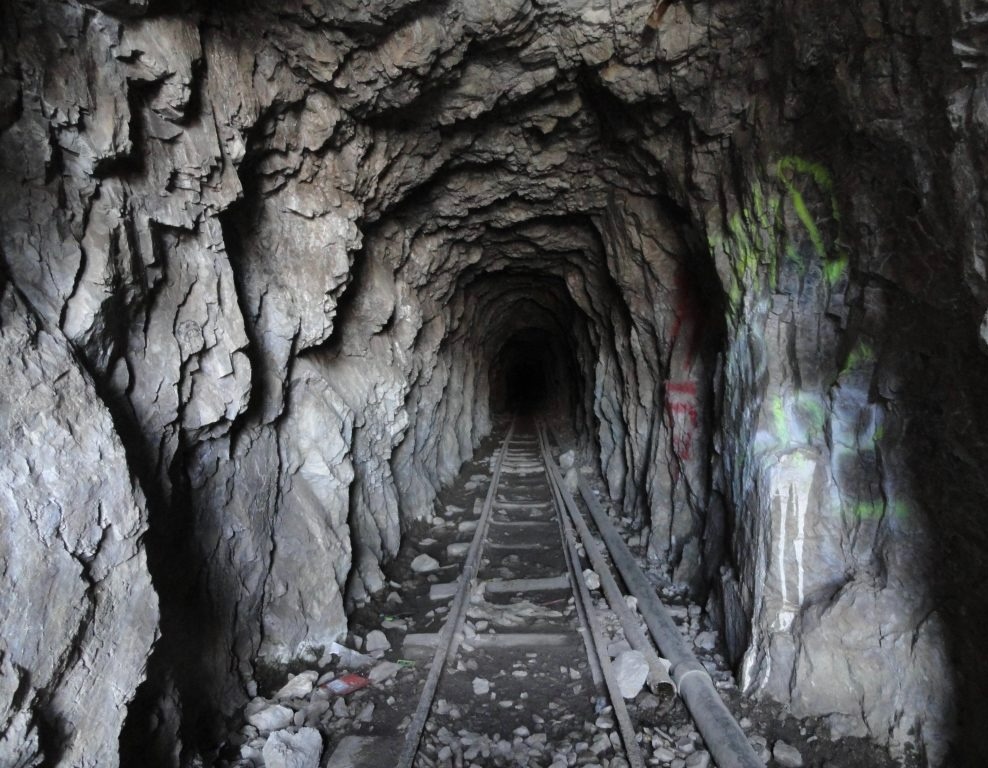
At its peak, the Big Horn Mine boasted an intricate labyrinth of tunnels and ventilation shafts probing deep into the mountain’s golden veins. The entire network spanned several miles across seven distinct working levels. To process the hauled-out rock, engineers erected a massive stamp mill, the ruins of which still cling to the mountainside. The machinery initially ran on water power—a standard, cost-effective setup for remote mountain sites at the time—before being upgraded to maximize production. For its era, the mine was a complex engineering feat. Crews dug the underground tunnels by hand using basic drills and explosives, while fresh air was pushed through vertical ventilation shafts. Working conditions were brutal, with miners facing dim lighting, choking humidity, and the constant threat of cave-ins. Without modern safety regulations, the job was incredibly hazardous, which naturally choked extraction speeds and ate into profits. Despite a wealth of gold locked in the rock, commercial mining proved to be a financial headache. While some pockets were incredibly rich, the soaring costs of digging and processing the ore eventually outpaced the returns. Still, during its heyday in the early 1900s, it stood as the largest operation around, earning the nickname “the king of the San Gabriel Canyon mines.”
The Final Closure
By the 1930s, the tide had turned. Even though significant gold deposits remained underground, the mine’s commercial viability plummeted. Steep transportation costs, a remote and punishing location, and the growing expense of deep underground mining crippled the operation. By the mid-20th century, most neighboring mines had either shut down or scaled back drastically. The Big Horn Mine bounced between various owners and operators, but none could find a reliable path to profit. Commercial operations finally ground to a halt in the latter half of the century when the site became an economic money pit. Shortly after, the Big Horn Mine was abandoned to the elements.
The Mine Today
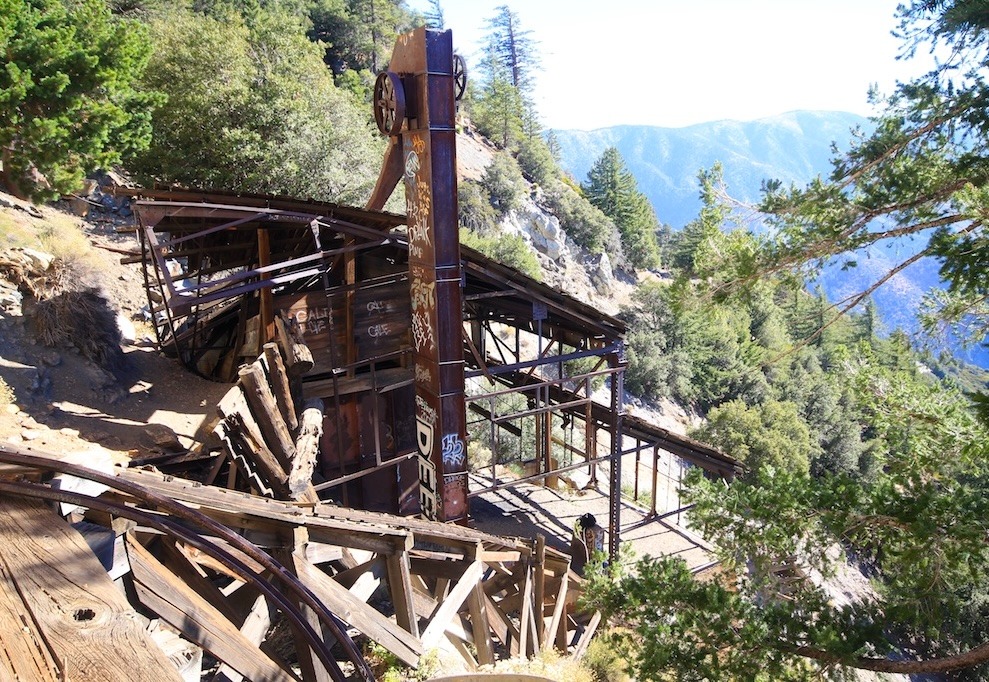
The ruins now rest quietly within the Angeles National Forest, managed by the U.S. Forest Service. The San Gabriel Mountains are a highly active natural environment, regularly reshaped by landslides, soil erosion, and wildfires. Because of this, nature is slowly reclaiming the Big Horn Mine. The Forest Service closely monitors the area, blocking off the most hazardous zones to balance the site’s historical appeal with public safety.
The area is a hit with hikers, thanks to its relatively straightforward trail and historical allure. The trek to the mine branches off the popular Mt. Baldy trail network. While considered moderately easy, mountain weather can change in a heartbeat. Winters bring heavy snow and ice, while summers feature scorching heatwaves and a serious risk of dehydration. Due to collapsing timber and unstable framing, the Forest Service has permanently sealed the underground tunnels. Fortunately, the striking exterior infrastructure remains open to view. Hikers can explore the skeleton of the old stamp mill, concrete foundations, and the gated tunnel entrances. The site remains a magnet for urban explorers, photographers, and industrial history buffs. What makes the location so special is the haunting contrast between the rugged wilderness and the industrial relics of a forgotten era. In the 2020s, massive wildfires swept through the region, presenting an ongoing threat to these historical landmarks—a classic risk for any mountain structure in Southern California.
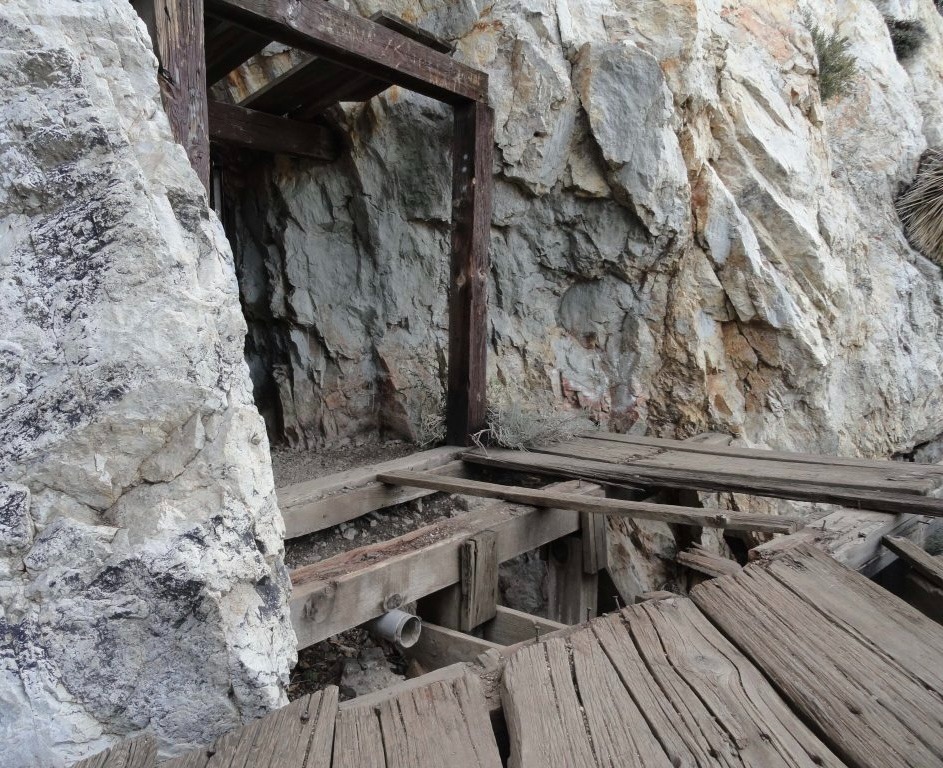
Beyond the hiking trail, this corner of the Angeles National Forest serves as an open-air classroom for mining history. Industrial archaeologists frequently study the remaining gear and tunnel layouts to piece together late 19th- and early 20th-century engineering techniques. The crumbling stamp mill is a particular point of interest, standing as one of the few surviving examples of early ore-processing infrastructure left in this part of California.
The story of the Big Horn Mine perfectly mirrors the ambition, economic hurdles, and cultural legends of the Old West. From its discovery in the late 1800s to its mid-century decline, the mine followed a path typical of the era’s gold ventures. Today, it stands not just as a historical monument, but as a striking reminder of how quickly economic tides turn—and how gracefully nature reclaims the spaces carved out by human ambition.