

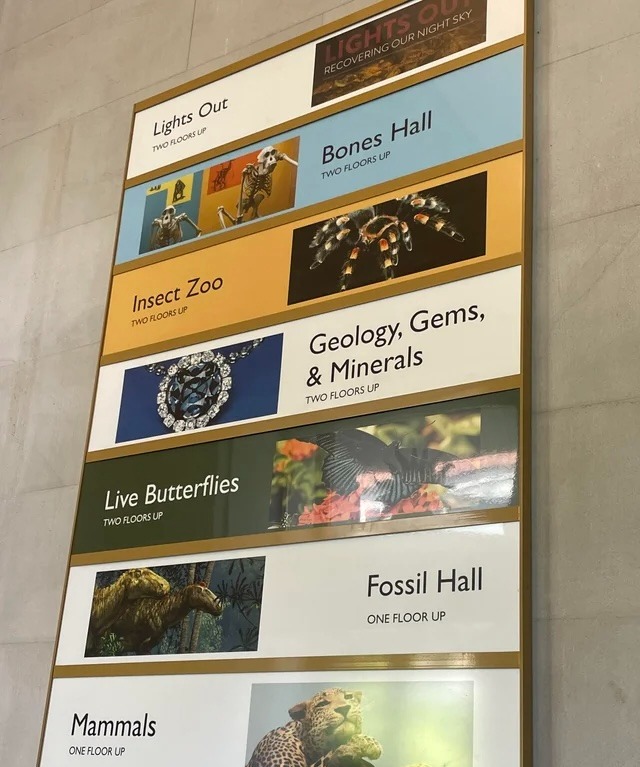
When most people think of national natural history museums, they picture static exhibits that haven’t changed in decades—like fossils, minerals, taxidermy animals, and archaeological artifacts. However, the Smithsonian National Museum of Natural History features a unique space that completely shatters this stereotype. Enter the Insect Zoo: a living exhibit where visitors can watch real bugs and other invertebrates in action. Far from a traditional display, it’s a dynamic science and education hub that blends research, public outreach, and a hands-on introduction to biodiversity. Read more on los-angeles.name.
How the Insect Zoo Began
The Insect Zoo didn’t start as a massive museum project. Instead, it debuted as a temporary summer pop-up exhibit back in 1971. At the time, the museum simply used standard fish tanks, and volunteers acted as guides, explaining the fascinating lives of bugs to curious guests. The experiment was a smash hit, far exceeding expectations. The exhibit returned year after year until August 23, 1976, when the Insect Zoo officially opened as a permanent fixture. This milestone made it the second living insect exhibit of its kind in the world, right after the London Zoo.
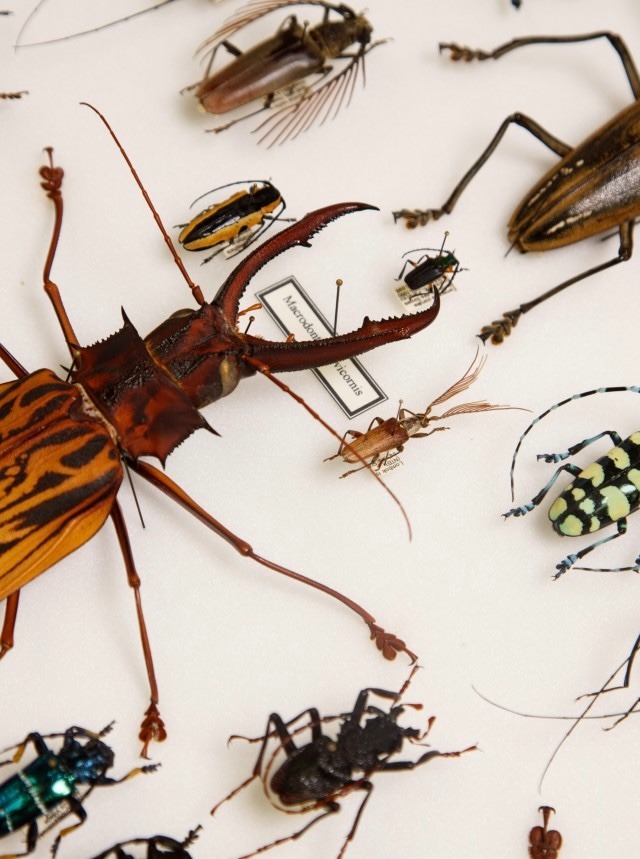
The exhibit is closely tied to the museum’s Department of Entomology. This department focuses on insect systematics, taxonomic research, tracing evolutionary links between species, and preserving global bug collections. These ongoing studies are a vital part of the Smithsonian’s long-term scientific mission to document the planet’s biodiversity.

Living Exhibits
What sets the Insect Zoo apart from traditional museum halls is that every exhibit here is alive. Visitors can watch the natural behaviors of various insects and arthropods, including spiders, millipedes, and a host of other invertebrates. Beyond the living displays, the museum’s entomology collection houses millions of insect and arthropod specimens, making it one of the largest of its kind in the world. Scientists use this massive archive to identify new species, compare morphological structures, conduct genetic research, and track historical shifts in biodiversity. Many of the live demonstrations at the Insect Zoo feature species that hold significant scientific value or serve as model organisms.
Interactivity is the heart of the exhibit. Volunteers host live feeding demonstrations, answer questions, and even allow visitors to safely handle certain species. Some of these critters come from scientific collections or specialized biological supply companies. Others are collected straight from nature by museum staff or amateur entomologists. Keeping many of these species—especially exotic bugs or those impacting agriculture—requires special permits from the USDA (United States Department of Agriculture).
Another major initiative connected to the Insect Zoo is the BioSCAN (Biodiversity Science: City and Nature) program. This project was launched to study:
- insect diversity in urban environments;
- how urbanization impacts invertebrate populations;
- new or previously undiscovered species.
This research helps scientists analyze city-dwelling biodiversity, track how species adapt to urban sprawl, and monitor ecological shifts in real time.
In 1986, the Insect Zoo celebrated its tenth anniversary as a permanent exhibit. The milestone featured presentations from staff and volunteers, along with special events highlighting the living museum’s unique charm. By 1992, the exhibit received a major upgrade thanks to sponsorship from the Orkin Company. Following renovations, it reopened in 1993 as the O. Orkin Insect Zoo. This revamped format broadened its educational scope, placing a sharper focus on the global ecological role of insects and their connections to natural ecosystems. According to museum surveys, the Insect Zoo consistently ranks among the top three most-visited exhibits. Drawing over a million visitors annually, it stands proudly alongside the famous dinosaur and gem halls.
Meet the Bugs
The exhibit features a wide array of invertebrates, scientifically classified as both insects and broader arthropods. While exploring the museum, visitors can spot:
- stick insects, perfectly camouflaged as twigs and leaves;
- grasshoppers and locusts, including massive tropical species;
- butterflies at various stages of their life cycle;
- scarabs and other fascinating beetles.
Special attention is given to larvae and pupae. These are displayed in a dedicated “nursery room” that beautifully illustrates the complete life cycle of bugs.
The live exhibit also boasts several species of tarantulas and scorpions. The tarantula feeding demonstrations, hosted by museum staff at scheduled times, are a massive crowd-pleaser. One of the undisputed stars is the Mexican redknee tarantula, a frequent guest in educational shows thanks to its docile nature. Another fan favorite for hands-on encounters is the Madagascar hissing cockroach. These large, wingless bugs are famous for the distinct hissing sound they make to communicate and defend themselves. Visitors can also marvel at leaf insects. By perfectly mimicking the look of leaves and stems, they serve as a masterclass in natural camouflage and are often used to teach evolutionary adaptation.
Scientific and Educational Impact
The Insect Zoo isn’t just for entertainment; it serves a crucial educational purpose. It helps the public grasp the essential role insects play in natural ecosystems. As an official part of the Smithsonian’s educational programming, the zoo caters to school field trips, family visits, and popular science demonstrations.
Museum volunteers undergo rigorous training. They learn the basics of entomology, protocols for handling live animals, and techniques for safe interactions with the public. This ensures that every hands-on encounter is both scientifically accurate and completely safe for everyone involved.
The Insect Zoo regularly acts as a platform for public science. Through live demos and educational events, the museum explains:
- the role of insects in global ecosystems;
- how climate change impacts biodiversity;
- the critical importance of pollinators to agriculture.
The invertebrates on display perform vital functions: pollinating plants, decomposing organic matter, and naturally controlling pests. By highlighting these jobs, the exhibit builds an understanding that bugs are a critical piece of the ecological puzzle. Programs like these are a core part of the Smithsonian’s broader strategy to make science accessible and engaging for the general public.
In 2008, the museum expanded its living footprint by adding the Butterfly Pavilion. This new addition perfectly complemented the Insect Zoo, offering even more ways to showcase insect life cycles. Ultimately, the Insect Zoo set the standard for how a museum can break free from static displays and evolve into a living, breathing research space.
Its lasting impact comes down to three key areas:
- popularizing science for mainstream audiences;
- advancing entomological research;
- fostering environmental awareness.
This interactive format proves that even the smallest creatures can spark massive interest and dramatically shape our understanding of the natural world.
The Insect Zoo at the Smithsonian National Museum of Natural History is a prime example of blending hard science, education, and immersive experiences. What started as a fleeting summer exhibit has transformed into one of the most popular living displays on earth. Its history is proof that a museum doesn’t just have to be a vault for the past—it can be a vibrant space for exploring nature as it lives and breathes today.