

When you think back to the late 19th and early 20th centuries, Los Angeles dwellers believed there was only one way to conquer Southern California’s waterways. It’s about building a dam. Los Angeles Name will tell you more about these attempts, their success and failures, which ultimately led to large-scale tragedies.
St. Francis Dam
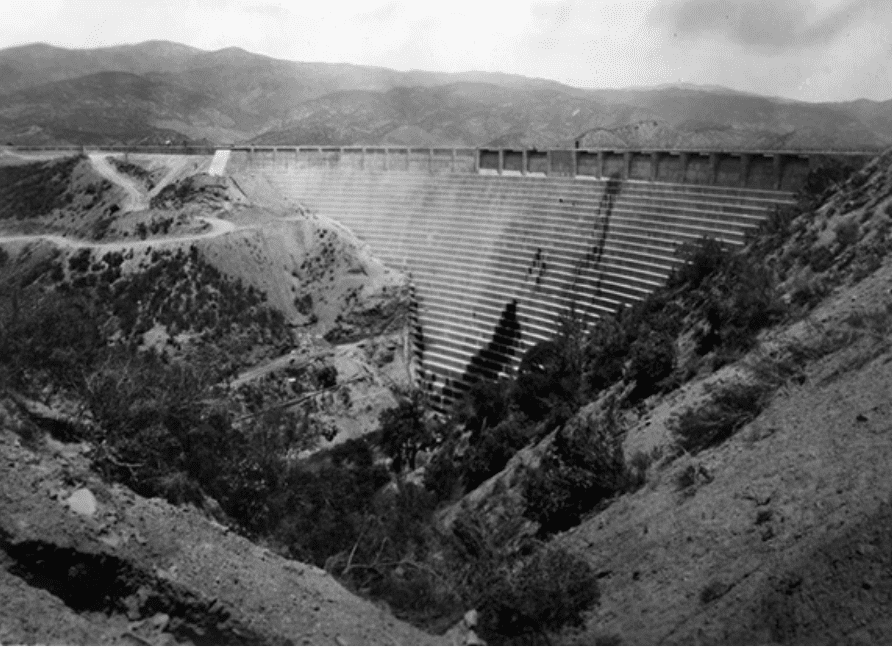
Located in Santa Clarita, this dam was one of the largest historic dams in the area. It was built by a then notorious and successful Los Angeles engineer in 1928, William Mulholland. He chose to use San Francisquito Canyon to enclose the reservoir. However, the engineer overlooked the fact that the ground was unstable and unable to hold so many walls and water.
It led to fatal consequences. St. Francis Dam takes second place in terms of casualties, with the 1906 San Francisco earthquake and fires taking first place. How many people died as a result of the dam breach? It’s hard to say for sure because some people were never found after being washed up on the shores of the Pacific Ocean. The turbulent waters destroyed everything in its path without letting the dead bodies be retrieved.
William Mulholland was left unemployed after this failure, his successful career over. Present-day Los Angeles citizens can now see a pile of concrete wreckage, walk down the hillside and view the picturesque landscape. It evokes numerous thoughts, with the imagination immediately conjuring up images of the locations where the dam stood in 1928. It’s hard to miss the shattered concrete wreckage as scars that remind us of a disaster caused, in essence, by human error.
The St. Francis Dam was formally recognized as a national monument in 2019. In April, around the anniversary of the dam disaster, the Santa Clarita Valley Historical Society employees organize annual tours of the dam site and flood zone.
Mulholland Dam
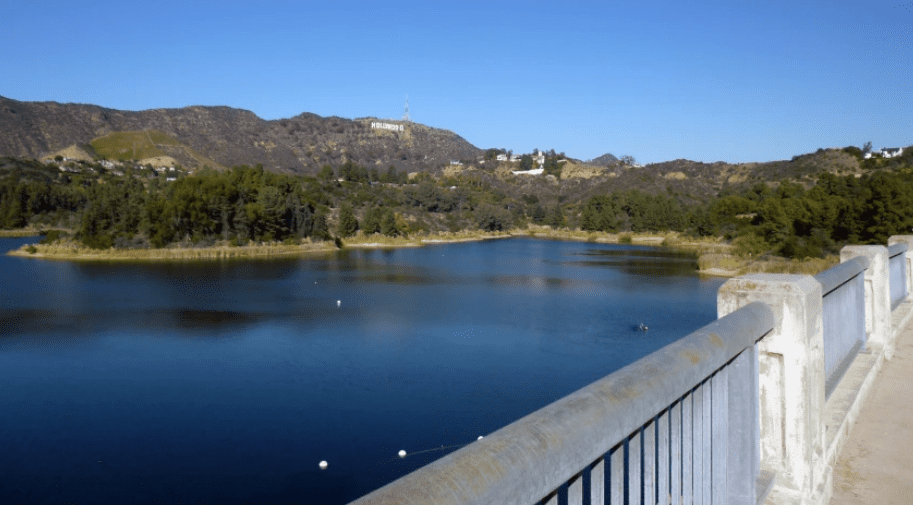
This dam repeated the fate of the previous reservoir. The dam was designed by the same engineer, William Mulholland. The project, initiated on behalf of the Bureau of Water Works and Supply (Department of Water and Power), was completed in 1924. The formal opening occurred in 1925. The project was almost identical to the St. Francis Dam.
After the tragedy, a catastrophic breach, the engineer, Mulholland, had ordered to lower the canyon dam. In his view, this decision should alleviate the pressure and risks of another tragic breach. Mulholland Dam had a more stable site, but this did not save it from breaching.
This place is not mysterious. On the contrary, it is available to the public. The site includes parks, hiking and biking paths, with some absolutely breathtaking lake vistas. The east side pathway takes you to the south of the reservoir, with the famous Hollywood sign in the background and the concrete construction of the Mulholland Dam in the distance.
Hansen Dam
Flooding in Los Angeles has been a significant problem.
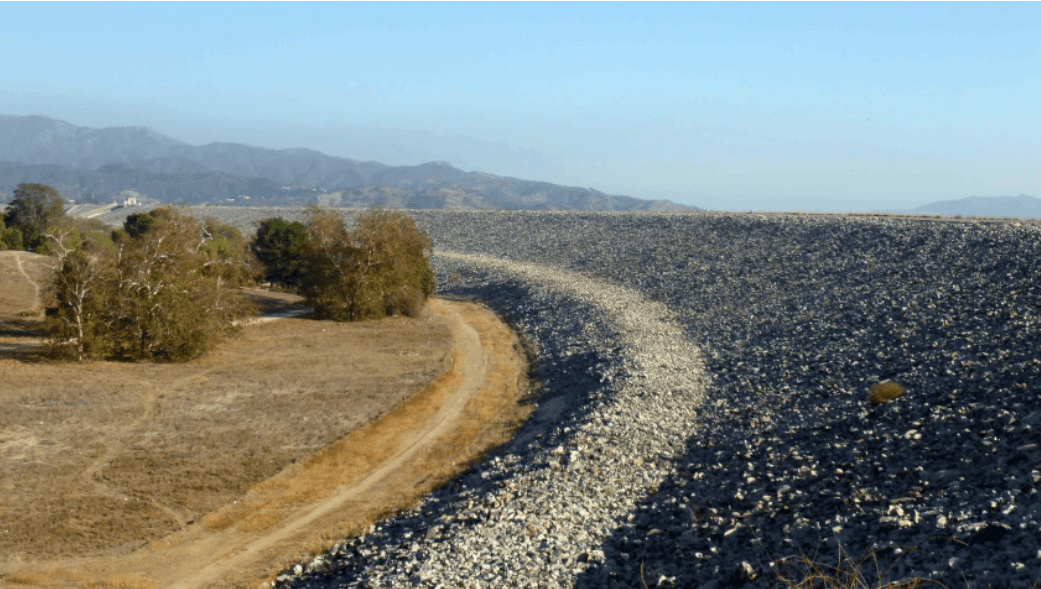
If we recall the year 1938, it was decided to build the massive Hansen Dam due to disastrous flooding. It is named for the Hansen spouses and is located by the Angeles National Forest. It was their local horse ranch that was flooded because of the dam.
Hansen Dam was completed in 1940. The structure’s monumental earthen wall stood high above the trails and did not obstruct the water flow. It won’t slow the water flow, but it will minimize the disasters caused by flooding.
To this day, the dam remains a marvel of engineering that also provides a magnificent view of the surrounding area, such as the vantage point of the northern San Fernando Valley.
Lower Van Norman Dam
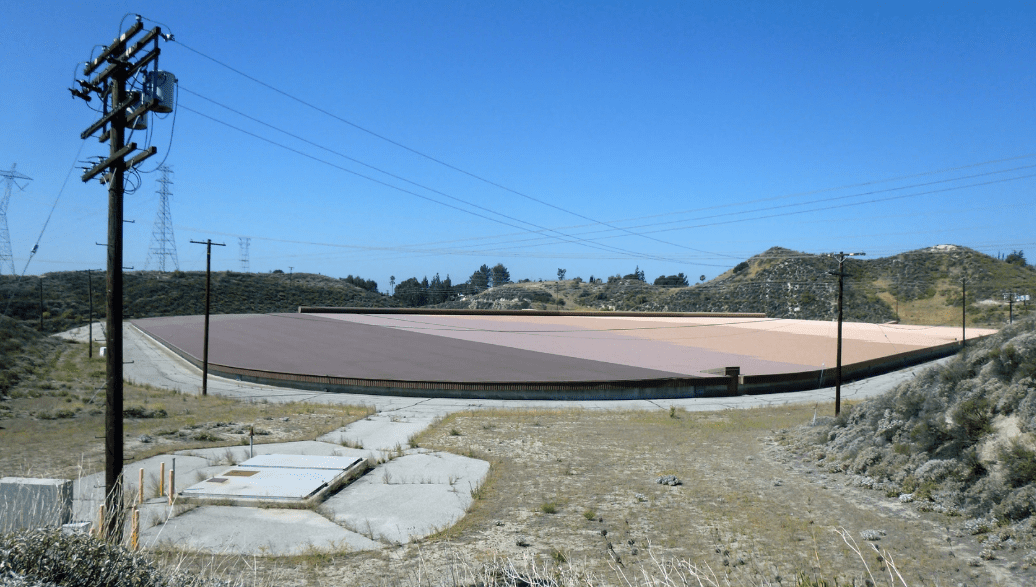
While earlier city dwellers were familiar enough with its name, modern-day Los Angeles residents know it as the Los Angeles Reservoir complex. The area of the reservoir in the hillside neighborhood is astounding. It was constructed back in 1977 and became part of the Los Angeles Aqueduct system. Here we are speaking about storing filtered water and supplying it to consumers. The dam is 176 acres in size and has a reservoir capacity of 3.3 billion gallons.
Initially, the location was the Lower Van Norman Dam, named after an employee and friend of engineer Mulholland. The name in question is Harvey Arthur Van Norman. Caused by the 1971 Silmar earthquake, the dam was nearly destroyed. The consequences were as follows:
- Highway 5 had to be closed.
- All households in the vicinity were evacuated. It was a mass evacuation.
Agency officials had realized that the 1,100-foot dam needed to be repaired and had previously constructed a backup reservoir to handle any overflow. They did require it since water levels needed to be reduced before they burst the top of the collapsing dam. The reservoir has a spillway on each side that leads to a canal-like drainage trench in case there is too much water. But most of the water is treated with an Ultraviolet Disinfection Facility and used.
The Los Angeles Department of Water and Power owns the water stored at this location. The area is occasionally available for walking within a project called Reservoir Walks. The LADWP community has shared the information.
Baldwin Hills Reservoir
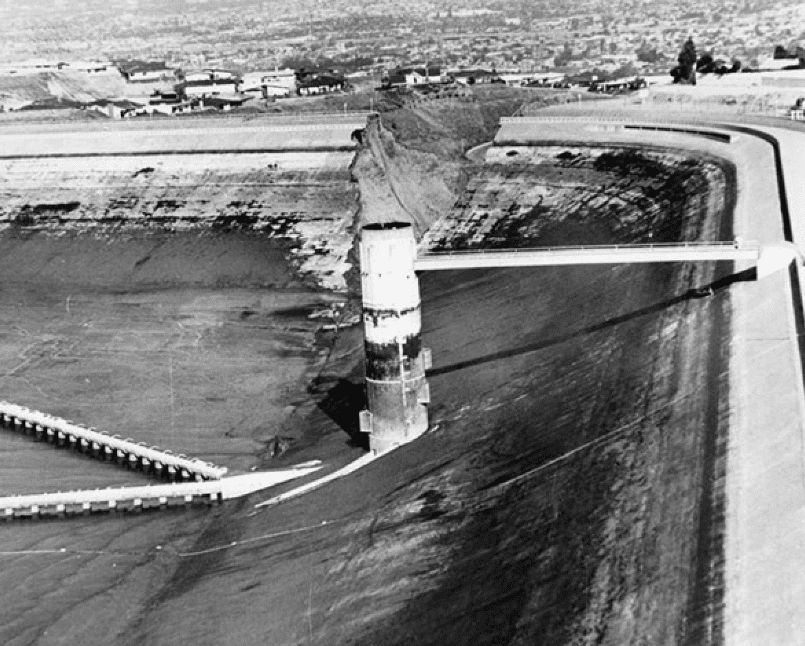
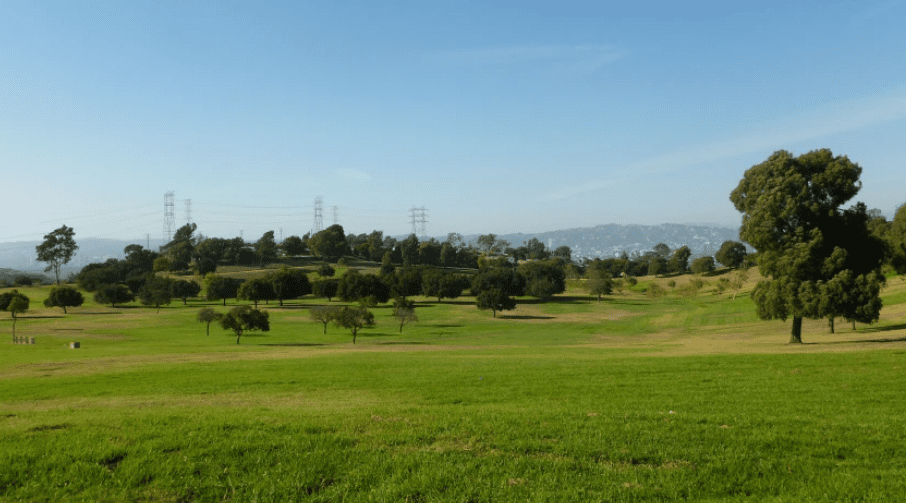
The reservoir is located in the Kenneth Hahn State Recreation Area. It’s a well known community park in the Baldwin Hills neighborhood owned by Los Angeles County Parks and Recreation. Much of it is in the basin of the former Baldwin Hills Reservoir. It is known to be built in 1947-1951 and failed to operate in 1963. In Janice’s Green Valley, you can see the empty reservoir bowl located in a grassy hollow.
Photographs of Baldwin Hills Reservoir have been preserved, documenting the damaged portion of the dam at the upstream end (December 1963).
The community park and its story
The park covers an area of 338 acres. In 1924, developer “Lucky” Baldwin extracted oil from the site, with further actions resulting in the disturbance of marine sediments. Those, in turn, formed the base of the dam and reservoir. The amount of oil pumped out determined the degree of land sinking. The oil company, as well as the engineers, were unaware of it at the time. It became clear only subsequently that such actions had led to the dam’s subsidence and collapse, so the fate of the reservoir was doomed. There was no chance for further existence and performing its functions.
In December 1963, the dam collapsed with a distinctive sound. Water started leaking out from behind the east abutment of the dam. It was not a quick process, for it was enough to notify the citizens and evacuate. Three hours later, the dam breached, leaving the reservoir practically empty. One can only imagine what the consequences would have been if they hadn’t managed to evacuate people. Hundreds of homes were washed away caused by about 250 million gallons of water breach. Unfortunately, five people lost their lives.
Since then, it has been known that the dam has not been restored, with the reservoir not being filled with water but simply with the parkland. Incidentally, the vast communal park was able to open in 1984.
Building dams
People were eager to fight flooding. It was a full-fledged problem in Los Angeles, so the establishment of various projects and their funding began. As early as 1936, the county hired 14 contractors working on 31 contracts. It is worth noting that the construction of dams was very complicated, as technology was limited at the time, and almost all work was done manually, especially in the early stages. Contractors were able to complete an average of 200 linear feet of sloping paving per day.
Interestingly, the dams in question can be seen by present-day citizens in many films. Major tragedies, like the St. Francis Dam disaster, have inspired filmmakers to create new works. Moreover, if you wish, you can always visit these places in person, having previously familiarized yourself with their history.