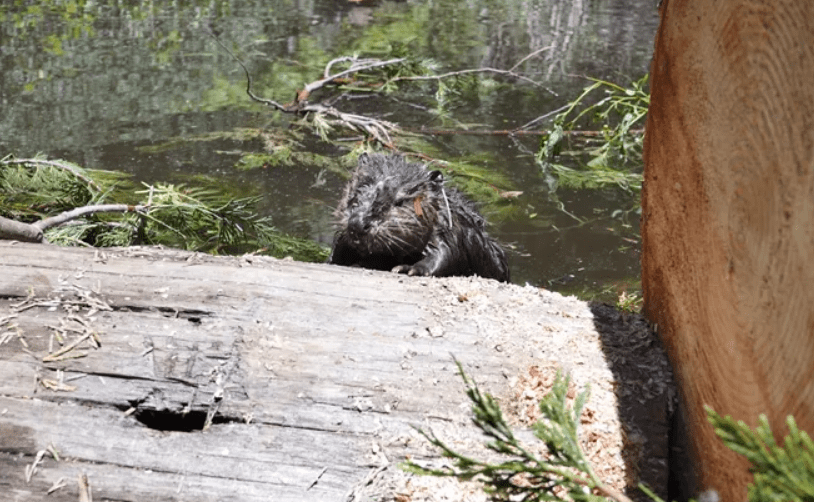
It’s hard to imagine how many advantages these furry creatures can bring. Their dams are instrumental in forming moisture-rich areas that help slow down the wildfires spread in California. More details about this unconventional ally in battling California’s wildfires will be revealed by los-angeles.name.
The historical background of beavers in North America
Prior to the onset of colonization, the North American beaver population was estimated at around 200 million. The number started shifting in the 1800s as settlers began to hunt them for their valuable pelts. As a result, the population of animals started decreasing quickly.
It’s still a common belief among modern farmers and landowners that beavers are nuisances. Researchers have approximated that there are 12 million beavers in existence. Recently, there has been a surge in research interest in these creatures and members of the Tule River Tribe even regard beavers as environmental engineers.
It’s worth mentioning that in 2022, the California Department of Fish and Wildlife secured funding for a Beaver Restoration Program. This program is specifically focused on restoring beaver populations and supporting conservation initiatives.
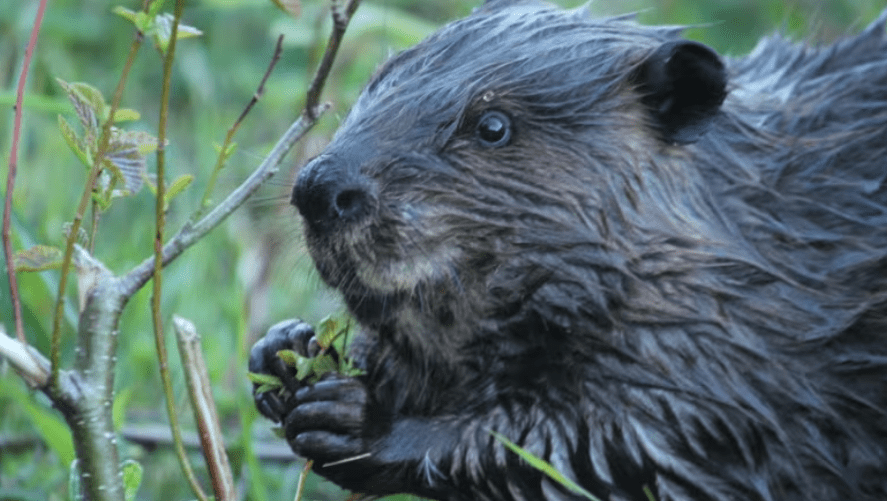
Beavers and wildfires
California’s wildfire data is heartbreaking. Three wildfires, for instance, scorched nearly 1 million acres in the Sierra Nevada Forest in 2020 and 1.5 million acres in 2021. However, researchers anticipate that bringing back beavers could lower the chances of wildfires and potentially decrease their occurrence.
Here are some key points that showcase the importance of beavers in battling wildfires in California:
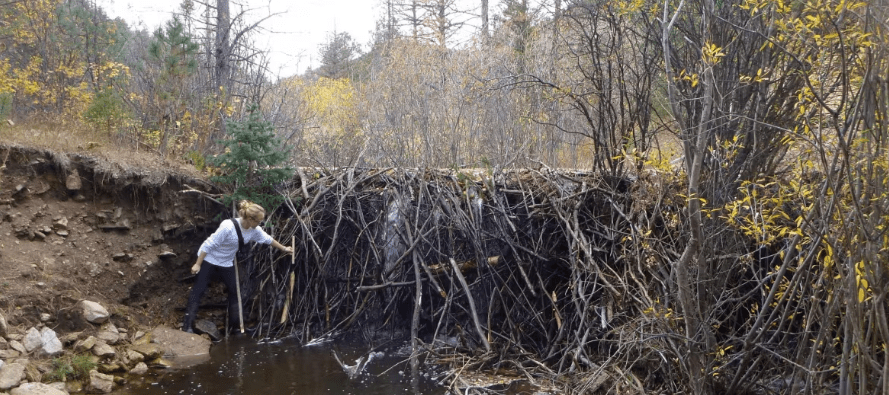
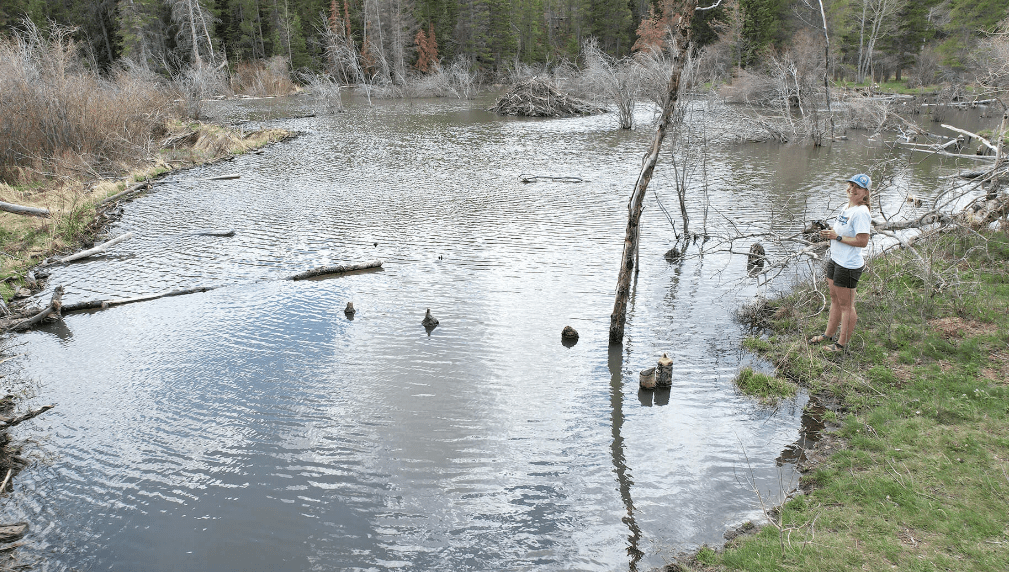
- Beavers construct dams, which lead to the formation of ponds and small water bodies. These bodies of water help keep the surrounding soil moist, making it harder for fires to spread.
- The moist vegetation and soil around beaver ponds serve as natural fire barriers. This also stops the fire from spreading across extensive regions.
- Beaver-made ponds play a crucial role in supporting diverse plant and animal species. This adds to the general well-being of the ecosystem.
An assistant professor, Emily Fairfax, who is also a researcher, highlighted that one of her significant findings is the uniqueness of beaver complexes. They can nearly eliminate the impacts of drought and also assist in mitigating the effects of wildfires. Numerous studies have recognized the advantages of involving beavers in sustainability initiatives, especially in the context of climate change. Their activities contribute to minimizing flooding and lowering temperatures in upstream streams.
The assistant professor noted that during dry seasons when vegetation begins to wilt, beaver complexes can retain sufficient water to keep the surrounding plants vibrant and healthy.
This is especially noticeable in cases of fires in the area, like those caused by lightning or an unattended campfire. The lush, green areas maintained by beavers are significantly harder to ignite.
Tule River Tribe of California
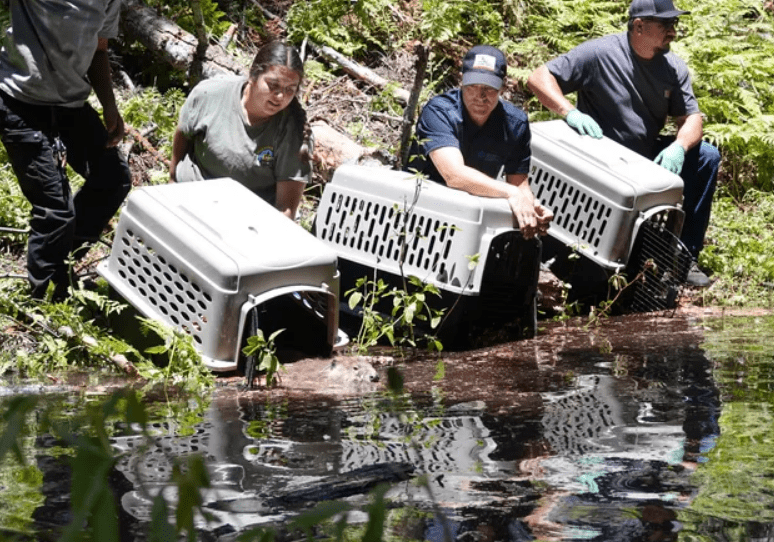
In 2024, the Tule River Tribe in southern California introduced nine beavers into a national reservation located in the Sierra Nevada Mountains’ foothills. This initiative was based on the belief that these furry critters can enhance the landscape’s resilience against fires and droughts, which helps reduce wildfire risks. Additionally, it is fascinating how beaver dams play a crucial role in aiding the recovery of forested areas post-fire.
Kenneth McDarmet from the Tule River Tribe of California, shared his thoughts on their past experiences with drought. He expressed how wonderful it is to observe the beavers in action. Approximately 80% of the drinking water for the Tule River Reservation is sourced from the Tule River watershed, making this region crucial. Since 2014, they have been taking steps to prepare the area. Tribal members have been constructing artificial dams to help the beavers adjust more quickly and effortlessly.
Some interesting information
In 2023, the California Department of Fish and Wildlife acknowledged beavers as a keystone species. These animals influence other species and the overall ecosystem. The researchers are convinced that the lack of beavers adversely affects the landscape and interconnected ecosystems. Hence, the California Department of Fish and Wildlife is collaborating with tribes such as the Tule River Tribe of California, along with non-profit organizations, landowners and federal and state agencies. This partnership aims to restore the beaver population and develop a suitable habitat for them. These efforts are also essential to assist California in developing resilience to climate change, drought and wildfires.
- Beavers have been building beaver dams for centuries. They use different materials to construct these structures, including twigs, rocks, dirt and similar items.
- Beavers are among the most impactful architects in the animal world, significantly altering their environments through dam construction. This perspective is shared by Emily Fairfax, an Assistant Professor of Ecology and Resource Management at California State University Channel Islands. In her research publications, she identifies beavers as essential components of a climate action strategy for North America. She advocates for maximizing efforts to coexist with and reintroduce beavers in specific areas. An Assistant Professor describes beavers as ‘highly skilled environmental engineers’ due to their remarkable capability to adapt to nearly any environment and reshape it to meet their requirements.
- Beavers building their ponds create an essential water supply for numerous wildlife species.
- Researchers are keen to explore how beavers influence ecosystems and their potential impact on climate change and wildfires.
- Beavers don’t charge for their work. This section should include the insights of researcher Glynnis Hood, who has been studying beavers for over two decades. However, her research suffered a setback in 2002 when a severe drought hit North America. Glynnis Hood pointed out that beavers are an amazing source of free labor because they don’t take weekends or breaks. Their industrious nature is a key factor in their frequent clashes with humans.
In discussions about beavers, conflicts with humans frequently arise. For instance, Emily Fairfax has highlighted that there are practical methods to mitigate the negative impacts beavers may have on people, all while taking advantage of the valuable ecosystem benefits they provide.
The researcher provides clear examples: wire fencing can be used to protect trees, and pond levelers, which are pipes in a dam allowing water to flow, can help prevent flooding upstream.
Prospects and expansion of biodiversity
A public information officer from the California Department of Fish and Wildlife discussed the positive changes for wildlife on land. She highlighted that expanding water areas will lead to a greater variety of plants and animals. Regarding amphibians, she mentioned pond turtles, southern mountain yellow-legged frogs and southwestern willow flycatchers. Enhancing amphibian living environments will contribute to boosting biodiversity.
Numerous American researchers believe that the introduction of beavers and the growth of their populations represent significant changes on a continental scale.