

The city dwellers could extend the workday for a bit longer thanks to gas lighting. However, this opportunity was not accessible to all due to the expensive prices of lamps and gas. Even affluent residents of Los Angeles had to be frugal, often lighting only a few rooms at night. More details on this topic will be revealed by los-angeles.name.
Gas for illuminating Los Angeles
In the 19th century, Los Angeles relied on new energy sources far more than many other Western cities. It marked the transition from a rural community to a modern metropolis.
Street lighting posed a new challenge that demanded significant effort. For instance, as early as the 1880s, gas was utilized for illumination. Eventually, it became a common source of lighting not only for the streets but also for homes. Gradually, city dwellers grew increasingly reliant on fossil fuels for their lighting needs.
In this context, the difference between the past and the present is significant. Historically, gas was utilized for lighting and heating, leading to what is known as the first gas age. Today, however, contemporary residents of Los Angeles are hesitant to rely on fossil fuels and incur environmental taxes. It’s reasonable to think that the gas stoves and space heaters that have long been staples in Southern California homes may soon become outdated as well.
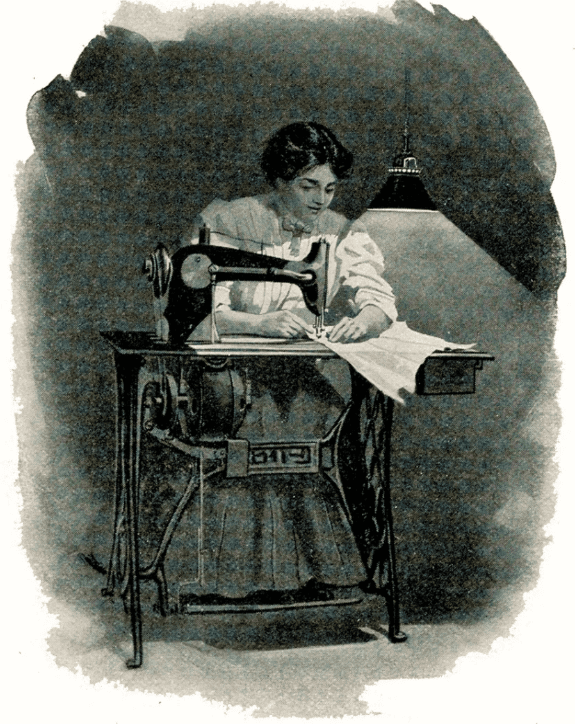
Gas lighting in the 1860s
If we look at Los Angeles specifically, the city was a bit late to the party when it came to gas streetlights. For instance, Baltimore installed gas streetlights as early as 1817, and by 1825, Broadway in New York City was fully illuminated with industrial gas. San Francisco got its first gas streetlights in 1854.
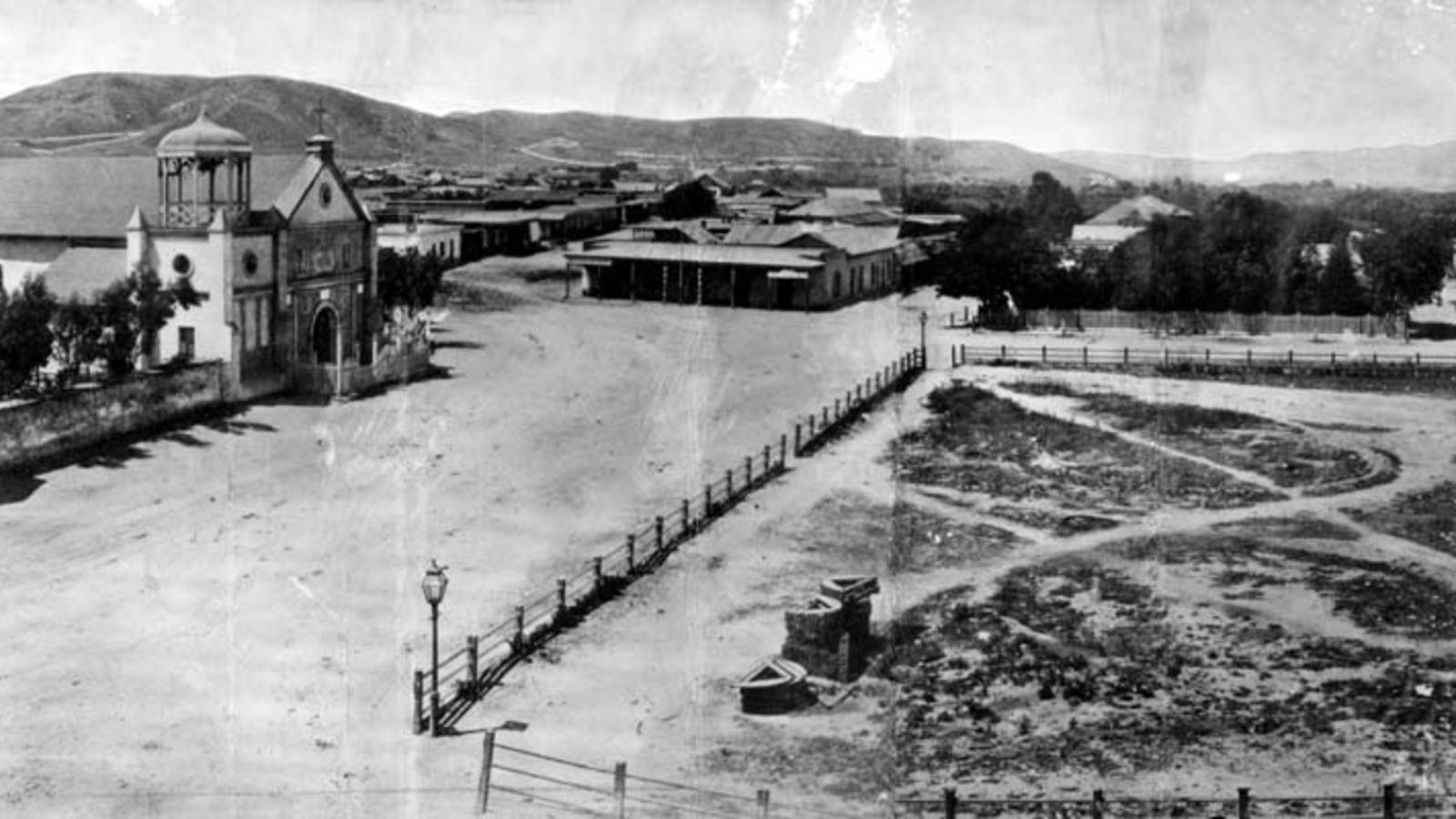
So, what was Los Angeles like back in 1854? The city’s streets were entirely dark, with just a handful of lanterns hanging outside bars and shops to help people find their way around.
Those were frightening days filled with dimly lit streets, often paired with equally distressing circumstances. When people had to venture out after dark, they carried lanterns lit by candles. Most residents of Los Angeles preferred to stay off the streets during the evening and nighttime to steer clear of muggers and other criminals. This situation couldn’t continue indefinitely.
Authorities’ decision
The city authorities gave the green light to two local entrepreneurs in 1860 to set up a gas plant and lay distribution lines. It was an exclusive right, an exceptional opportunity to light the city’s streets.
Unfortunately, this venture didn’t work out, just like the earlier attempts to modernize the city. The main challenges this time were the steep prices of raw materials and insufficient funding to implement the plan.
It was structured like this: Coal was used to produce illuminating gas, which led to the creation of coal gas—a by-product that is both low in energy and toxic.
Interestingly, a receipt from the Los Angeles gas company detailing the gas supply has been preserved. These receipts are part of the historical photo collection maintained by the city’s Department of Water and Power. Today’s residents might find it fascinating that the city was billed 415 dollars for gas provided to 56 streetlights. When adjusted for inflation to 2022, that amount would be roughly equivalent to 9,300 dollars.
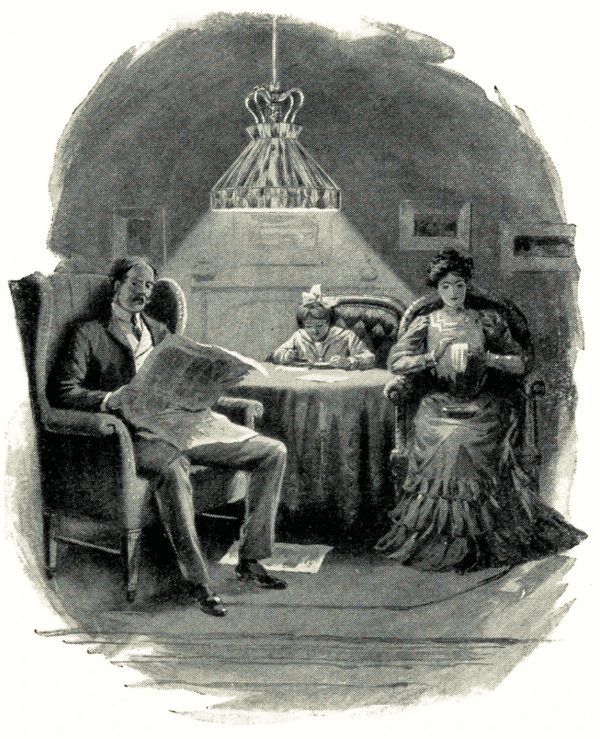
Los Angeles Gas Company
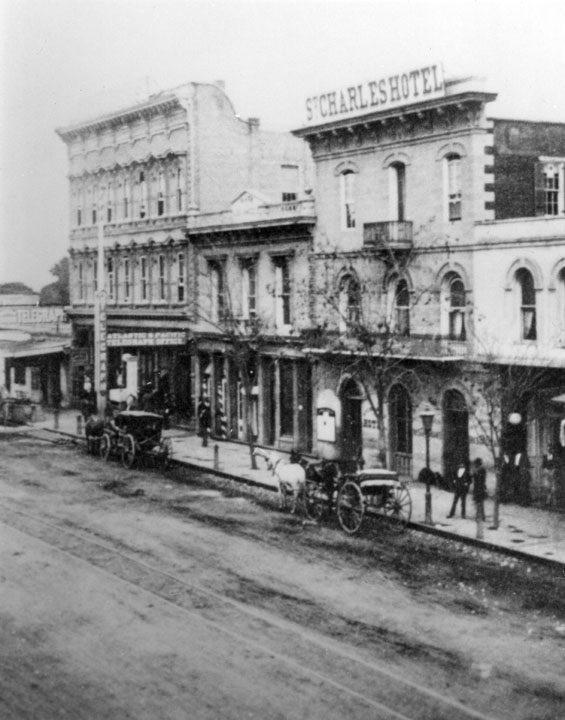
This company secured a franchise in 1867 and started providing gas for lighting streets, homes and businesses. By 1869, the city had installed 56 gas streetlights, primarily located near the factory and in front of major hotels like Bella Union and Pico House. However, many other streets and neighborhoods remained unlit, leaving residents hesitant to venture out after dark.
In 1876, the price for a thousand cubic feet of gas for individual users was 7.5 dollars. Gas was seen as a luxury, accessible only to the affluent residents of Los Angeles. Meanwhile, ordinary residents relied on kerosene lamps, which generated light by burning kerosene and tallow candles made from rendered animal fat.
City residents expressed their frustration and pressured the gas company to reduce the rate, which they found excessive at 7.5 dollars. Consequently, the company adjusted the rate to 6.75 dollars per thousand cubic feet.
One could argue that the city council was corrupt at a time when its members could request service changes, establish rates, or withdraw right-of-way privileges. Utility companies actively resisted these efforts.
Historical records indicate that from 1865 to 1900, the companies providing water, gas, electricity, streetcar services and the Southern Pacific Railroad were the key influencers in the political landscape of the city. This perspective is supported by historian Robert Fogelson.
Competition
By the 1890s, gas lamps had significantly improved compared to their earlier versions. For instance, their illumination was more intense and consistent. The price of gas went down, yet the quality improved significantly.
Electric arc lights emerged as a strong competitor to gas lighting. In 1882, these lights were elevated to 150 feet to avoid blinding pedestrians. Subsequently, the entire business district was illuminated by seven “moon towers” (a name they earned for producing light comparable to that of the moon).
The gas companies had no choice but to take action. They promoted the idea of homeowners swapping out wood stoves for coal-fired gas stoves. Company representatives urged the replacement of coal-burning stoves and water heaters with gas appliances. The next step was to convert steam boilers to use gas derived from oil. As a result, gas companies swiftly expanded into thriving gas-related ventures.
In 1890, Pacific Lighting purchased the Los Angeles Gas Company, leading to the establishment of the Southern California Gas Company. This company upheld its dominant status, continuing to be the largest gas supplier in the region.
Ending the story
During World War I, the illumination from gas lights in Los Angeles gradually dimmed. Since 1950, however, the second era of gas has emerged, which may also be coming to a close. Here are some factors contributing to this shift:
- Changes in climate and air pollution caused by the use of gas for lighting and heating. This relates to the release of smog and the increase in global temperatures.
- Technological advances and infrastructure investments are pushing the transition to cleaner energy sources.
- Local authorities are implementing stricter emission regulations, prompting residents to adopt eco-friendly transportation and renewable energy options. It is important to mention that Los Angeles actively engages in global climate change initiatives, requiring it to achieve specific environmental objectives.
The city’s residents recognize the environmental issues that will arise if they persist in relying on fossil fuels and gas. This awareness has prompted the implementation of stricter environmental regulations and a transition to cleaner energy alternatives. For city dwellers, conscious consumption and eco-friendly living are more than just slogans; they represent a widely embraced message.
So, that’s the story of how gas lighting came to illuminate the streets and homes of Los Angeles.